

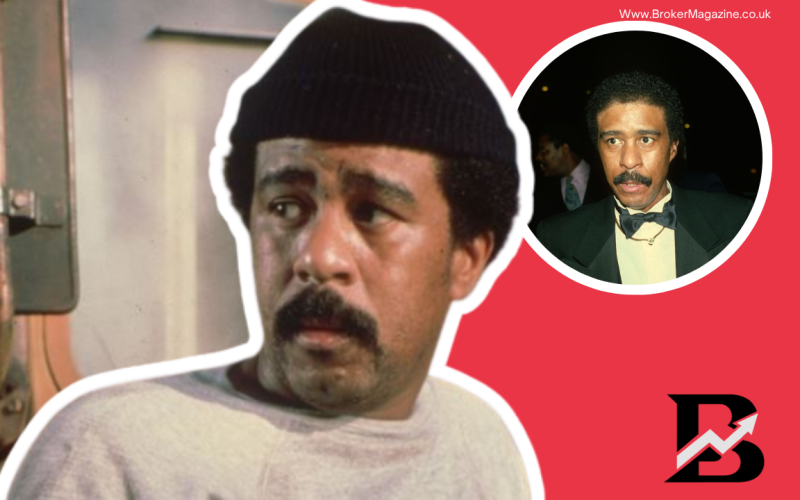
Richard Pryor Net Worth | Career Earnings, Estate and Financial Legacy
Richard Pryor built his fortune across stand-up comedy, record sales, film, television, writing, producing, and later the commercial exploitation of his name and creative work. The figure most often reported for Richard Pryor’s net worth at the time of his death in 2005 is approximately $40 million. That number should be treated as a historical estimate rather than a precisely documented current valuation of his estate.
The distinction matters. Pryor died on December 10, 2005, but his intellectual property did not stop generating commercial value. His recordings have continued to be reissued, boxed sets and archival material have reached new audiences, his autobiography remains commercially available, and the official estate continues to license and sell Pryor-related material. Jennifer Lee Pryor, his widow, has publicly stated that she oversees and manages the estate. Court records also show that Pryor revised his estate plan before his death and that substantial assets were directed to Jennifer.
Richard Pryor Net Worth at a Glance
| Detail | Information |
|---|---|
| Widely reported net worth at death | About $40 million |
| Year of death | 2005 |
| Age at death | 65 |
| Main sources of wealth | Stand-up, comedy albums, films, television, writing and intellectual property |
| Widow | Jennifer Lee Pryor |
| Estate status | Continues to commercially manage and exploit Pryor-related intellectual property |
| Best-known film earnings vehicle | Stir Crazy, among his major commercial successes |
| Major recording period | 1970s and early 1980s |
| Autobiography | Pryor Convictions: And Other Life Sentences |
The $40 million figure is frequently cited by celebrity-finance sources and was also reported by Forbes in its discussion of Pryor’s estate. It is best understood as an estimate of the estate’s value around the time of his death, not as an independently audited figure that can be applied unchanged to 2026.
How Much Was Richard Pryor Worth When He Died?
The most commonly reported estimate places Richard Pryor’s wealth at approximately $40 million in 2005.
That estimate is plausible in the context of the career he had built, but the public record does not provide a simple balance sheet showing exactly how much cash, property, investments, contracts, royalties, copyrights and other assets he owned on the day he died.
This is an important limitation when researching celebrity net worth.
Pryor had spent more than four decades building income-producing assets. His financial interests were not limited to money earned from individual movie roles. They included recordings, performance material, writing credits, intellectual-property rights, licensing opportunities and other assets that could continue producing revenue after his death.
A 2009 California Court of Appeal decision concerning Pryor’s estate confirms that he had revised his estate plan before his death and that substantial assets were directed to Jennifer Lee Pryor. The litigation involved challenges brought by Pryor’s daughter Elizabeth, but the court ultimately affirmed the relevant probate ruling.
The court record therefore provides evidence about the structure of the estate, while the approximately $40 million figure comes from later reporting and financial estimates rather than a publicly available audited estate statement.
Where Richard Pryor Made His Money
Richard Pryor’s wealth came from several interconnected parts of the entertainment business. His career is particularly interesting financially because he was not simply a movie actor who occasionally performed stand-up.
He was simultaneously a comedian, recording artist, screenwriter, television writer, actor, producer and director.
1. Stand-Up Comedy and Live Performances
Stand-up was the foundation of Pryor’s career and the source from which many of his other opportunities developed.
During the 1970s, Pryor became one of the most commercially important comedians in America. His concert performances were transformed into recordings and concert films, giving the same creative work multiple revenue channels.
The Television Academy lists a body of work that includes Richard Pryor: Live & Smokin’, That Nigger’s Crazy, …Is It Something I Said?, Bicentennial Nigger, Richard Pryor: Live in Concert, Richard Pryor: Live on the Sunset Strip and Richard Pryor: Here and Now.
These projects mattered financially because successful stand-up material could generate revenue through ticket sales, record sales, television broadcasts, home video and later reissues.
2. Comedy Albums and Record Royalties
Pryor’s recording career was one of his most important long-term commercial assets.
His Warner Bros. recordings included several of his most famous comedy albums, among them:
- That Nigger’s Crazy
- …Is It Something I Said?
- Bicentennial Nigger
- Wanted/Richard Pryor Live in Concert
- Richard Pryor: Live on the Sunset Strip
- Here and Now
Rhino has described these Warner Bros. releases as six career-defining albums from Pryor’s peak period. Several received gold or platinum certifications, and Pryor won multiple Grammy Awards for his comedy recordings.
The Recording Academy credits Pryor with five Grammy wins, including awards for That Nigger’s Crazy, …Is It Something I Said?, Bicentennial Nigger, Rev. Du Rite and Live on the Sunset Strip.
The financial importance extends beyond the original album sales. Pryor’s recordings have repeatedly been repackaged, remastered and reissued. The official Richard Pryor estate continues to market recordings and related products, creating the possibility of continuing royalty and licensing income.
That does not mean every dollar generated by a reissue becomes estate profit. Recording contracts, distributors, rights holders, production expenses and contractual royalty arrangements can all affect the amount ultimately received by an estate.
3. Film Salaries and Box-Office Success
Pryor’s film career became another major pillar of his wealth.
He appeared in commercially successful films including Silver Streak, Stir Crazy, Bustin’ Loose, Superman III, Brewster’s Millions, See No Evil, Hear No Evil and Harlem Nights.
One of the clearest examples of his increasing negotiating power was Stir Crazy.
Turner Classic Movies reports that Pryor received $1 million plus 10% of the gross for the 1980 film. That arrangement illustrates how his compensation had moved beyond a straightforward acting salary and into participation in a film’s commercial performance.
Stir Crazy eventually earned approximately $101.3 million domestically, according to Box Office Mojo.
That box-office total should not be confused with Pryor’s personal earnings. A movie’s gross revenue is distributed among exhibitors, distributors, studios, producers, investors and participants according to complicated contractual arrangements. The gross simply demonstrates the scale of the film’s commercial success.
His earlier pairing with Gene Wilder in Silver Streak was also significant. The 1976 film earned about $51.1 million domestically, according to The Numbers.
4. Television Writing
Pryor’s television work is sometimes overlooked when discussions of his fortune focus only on stand-up and movies.
He wrote for television programs including Sanford and Son and The Flip Wilson Show. He also contributed writing to Lily Tomlin’s television specials.
The Television Academy records Pryor’s 1974 Emmy win for writing on Lily. His official estate biography also identifies his work on Sanford and Son, The Flip Wilson Show and two Lily Tomlin specials.
Writing credits were financially valuable because they added another income stream to his performance career. More importantly, they demonstrated that Pryor’s commercial value extended beyond appearing in front of a camera.
5. Screenwriting and Producing
Pryor also earned income as a screenwriter and producer.
His credits included the screenplay for Blazing Saddles, which he co-wrote with Mel Brooks and others, as well as writing or story contributions to projects including Silver Streak, Bustin’ Loose, Stir Crazy and Jo Jo Dancer, Your Life Is Calling.
His official biography notes that Blazing Saddles earned Pryor a Writers Guild of America Award for Best Comedy Written Directly for the Screen.
These credits added another layer to his earning potential because Pryor could participate financially in projects not limited to his on-screen performances.
How Much Did Richard Pryor Earn From Stir Crazy?
One of the more specific publicly reported figures connected to Pryor’s movie earnings comes from Stir Crazy.
According to Turner Classic Movies, Pryor was paid $1 million plus 10% of the film’s gross for the 1980 comedy. The film ultimately grossed about $101.3 million domestically.
It would be misleading to calculate his income simply by taking 10% of the final box-office number. Film contracts can define gross participation in specific ways, and theatrical box-office receipts are not the same thing as a studio’s net profit.
Still, the deal demonstrates that Pryor had reached a level of bargaining power where his compensation could include substantial upfront pay and performance-based participation.
Richard Pryor’s Stand-Up Recordings Were a Major Asset
Pryor’s albums were not just promotional products for his live shows. They became valuable works in their own right.
His 1970s recordings captured the period in which his comedy was developing its distinctive combination of storytelling, social commentary, improvisation and personal observation. Several became award-winning and commercially successful releases.
The official estate lists gold, platinum and Grammy achievements associated with multiple recordings. Rhino has also released collections bringing together Pryor’s Warner Bros. catalog, while archival projects have expanded the commercially available body of his work.
That creates an important distinction between career earnings and estate earnings.
Pryor could earn money when an album was originally recorded and sold. Decades later, the estate can potentially benefit from licensing, reissues, compilations, streaming, physical releases and other uses of those recordings, depending on the underlying rights.
Did Richard Pryor Make Money From His Autobiography?
Yes. Pryor published his autobiography, Pryor Convictions: And Other Life Sentences, with Todd Gold in 1995.
The book was published by Pantheon Books and became another commercial expression of Pryor’s public identity and creative work.
Exact royalty income from the autobiography is not publicly documented in reliable sources, so it would be misleading to assign a specific dollar amount to the book’s contribution to his fortune.
The important financial point is that literary rights can continue generating income after an author’s death. Editions, reprints, licensing and other publishing arrangements can potentially produce continuing revenue for an estate, subject to the relevant contracts.
The official Richard Pryor estate continues to sell Pryor Convictions, demonstrating that the book remains part of the estate’s commercial catalog.
Richard Pryor’s Estate After His Death
Richard Pryor died on December 10, 2005, at age 65.
His estate subsequently became the subject of a substantial legal dispute involving his widow, Jennifer Lee Pryor, and some of his children.
California court records establish several important facts.
Richard and Jennifer had previously married in 1981 and divorced in 1982. They remarried in 2001 through a confidential marriage. The court record states that, before and after that remarriage, Pryor revised his estate plan to leave substantial assets to Jennifer rather than his six children.
The 2009 California Court of Appeal ruling upheld the relevant probate judgment. A companion case also rejected Elizabeth Pryor’s attempt to annul the 2001 marriage.
These decisions are useful because they provide primary legal documentation for the structure of the estate dispute rather than relying solely on celebrity reporting.
Was Jennifer Lee Pryor the Executor?
This point is frequently simplified online.
The official Richard Pryor estate website states that Jennifer Lee Pryor oversees and manages Richard Pryor’s estate. Other reporting and the court record describe her as a trustee, fiduciary and person with significant control over Pryor’s estate and intellectual property.
However, the sources reviewed for this article do not establish that “executor” is the appropriate current formal title to use for Jennifer in every legal sense.
For accuracy, it is better to describe Jennifer Lee Pryor as Richard Pryor’s widow and the person who oversees and manages his estate and legacy, rather than automatically calling her the executor.
That distinction is important because an executor, trustee, beneficiary and estate manager can have different legal roles.
What Happened to Richard Pryor’s Intellectual Property?
Pryor’s intellectual property is one of the most important reasons his financial legacy extends beyond 2005.
According to reporting on the estate dispute, Pryor amended his trust to give Jennifer control over significant intellectual-property interests, including his name, image and royalties connected to his comedy work.
The court proceedings confirm that Pryor’s estate plan made substantial transfers to Jennifer, while the official estate continues to operate commercially under her management.
Intellectual property can include rights connected with:
- Comedy recordings
- Film and television work
- Written material
- Name and likeness
- Photographs and archival material
- Merchandise
- Licensing
- Reissues and compilations
- Documentary and biographical projects
The value of these assets can change over time. A recording that generated modest income in one decade can become more valuable when a new generation discovers an artist, while some rights can decline in value if demand falls.
Richard Pryor’s Posthumous Earnings and Legacy
Pryor’s estate has remained commercially active long after his death.
The official estate has continued to offer recordings, merchandise, collectibles and Pryor Convictions. His catalog has also appeared in compilation and boxed-set releases.
One example is …And It’s Deep Too! The Complete Warner Bros. Recordings (1968–1992), which collected a large portion of Pryor’s recorded legacy.
The estate has also been involved in documentary and film projects. In 2020, the estate announced MGM’s partnership with Kenya Barris on a proposed Richard Pryor feature film, with Jennifer Lee Pryor attached as a producer.
A proposed film deal should not automatically be counted as money earned by Pryor’s estate. Development agreements can change, projects can be delayed or abandoned, and compensation can depend on production and distribution arrangements.
It is more accurate to view such projects as evidence that Pryor’s intellectual property continues to have commercial value.
Why Richard Pryor’s Current Net Worth Is Difficult to Calculate
Searches for “Richard Pryor net worth” often produce a single number, but calculating a deceased entertainer’s wealth decades after death is much harder than the headline suggests.
There are several reasons.
Historical value is not the same as today’s value
The approximately $40 million figure generally refers to the estimated value around Pryor’s death in 2005.
It should not be presented as a verified 2026 estate valuation.
Estate assets are not all publicly disclosed
Private trusts and licensing agreements can contain financial information that never becomes part of the public record.
Royalties are contractual
The money generated by a recording, film, book or licensing agreement may be divided among multiple parties.
Intellectual property changes in value
The value of a celebrity’s name, likeness, recordings and written work can rise or fall depending on cultural relevance, licensing demand and new releases.
Estate expenses matter
Taxes, legal fees, management costs, licensing expenses and other obligations can reduce the amount ultimately available to beneficiaries.
For those reasons, $40 million is best described as a widely reported historical estimate, not a precise statement of what Richard Pryor’s estate is worth today.
Richard Pryor’s Major Revenue Streams
| Revenue stream | Examples | Financial significance |
|---|---|---|
| Stand-up performances | Live tours and concert performances | Foundation of his career and later recordings |
| Comedy albums | That Nigger’s Crazy, Bicentennial Nigger, Live on the Sunset Strip | Generated sales and royalty opportunities |
| Film acting | Silver Streak, Stir Crazy, Superman III | Major salary and participation opportunities |
| Film writing | Blazing Saddles, Stir Crazy, other projects | Added writing income and professional leverage |
| Television writing | Sanford and Son, The Flip Wilson Show, Lily Tomlin specials | Diversified his income beyond performing |
| Books | Pryor Convictions | Created publishing and royalty rights |
| Licensing and intellectual property | Name, likeness, recordings and merchandise | Important source of posthumous commercial activity |
| Reissues and archival material | Box sets and previously unreleased recordings | Extended the earning life of his catalog |
Richard Pryor’s Financial Legacy Compared With His Cultural Legacy
Pryor’s financial legacy is inseparable from the fact that he created work that remained commercially useful after his death.
A conventional performer might earn primarily from appearances. Pryor created multiple categories of intellectual property that could be repackaged and redistributed.
His comedy albums could be reissued.
His concert performances could be distributed in new formats.
His films could continue to be licensed and broadcast.
His autobiography could remain in print.
His name and likeness could support merchandise and licensing.
His life story could become the subject of documentaries and proposed films.
This helps explain why the question of Richard Pryor’s net worth cannot be answered simply by adding together the salaries publicly associated with his movies.
His lasting financial value came from the catalog of creative rights he accumulated over decades.
Richard Pryor Net Worth: What Can Actually Be Verified?
The most defensible summary is straightforward:
Richard Pryor was widely reported to have been worth about $40 million when he died in 2005. His estate continued to control and commercially exploit valuable intellectual property after his death, but there is no reliable public figure establishing a precise 2026 value for the entire estate.
The historical estimate should therefore be kept separate from current estate value.
What is well documented is the breadth of Pryor’s earning career. He generated income through live comedy, successful recordings, film salaries and participation, television writing, screenwriting, publishing and intellectual-property rights. His widow, Jennifer Lee Pryor, has continued to oversee and manage the estate and its commercial legacy.
That combination makes Pryor’s financial story less about a single net-worth number and more about the enduring value of a large entertainment catalog.
Frequently Asked Questions
What was Richard Pryor’s net worth when he died?
Richard Pryor’s net worth was widely estimated at about $40 million at the time of his death in 2005. The figure is an estimate rather than a publicly audited final balance sheet.
How did Richard Pryor make his money?
His wealth came from stand-up comedy, live performances, comedy albums, movie salaries, film participation, television writing, screenwriting, producing, publishing and intellectual-property rights.
Did Richard Pryor make money from Stir Crazy?
Yes. Turner Classic Movies reports that Pryor received $1 million plus 10% of the gross for Stir Crazy. The film ultimately earned about $101.3 million domestically. His contractual participation should not be equated directly with 10% of the film’s total box-office receipts.
Who manages Richard Pryor’s estate?
Jennifer Lee Pryor, Richard Pryor’s widow, publicly states through the official estate website that she oversees and manages his estate. Court records also document her significant role in Pryor’s estate planning and trust arrangements.
Was Jennifer Lee Pryor Richard Pryor’s executor?
The available public sources establish Jennifer as his widow and as a person who oversees and manages his estate, as well as having significant trust and intellectual-property rights. The sources reviewed do not establish that “executor” is the universally applicable formal legal title, so that term should be used cautiously.
Did Richard Pryor have royalties after his death?
His creative catalog has continued to be commercially released and licensed after his death, including recordings, boxed sets, merchandise and his autobiography. Exact annual royalty amounts received by the estate are not publicly documented.
Did Richard Pryor’s children inherit his estate?
Pryor’s estate plan became the subject of litigation after his death. The California Court of Appeal documented that Pryor revised his estate plan to leave substantial assets to Jennifer rather than his six children. The litigation ultimately upheld the relevant probate ruling.
How much did Silver Streak make?
Silver Streak, released in 1976 and starring Richard Pryor and Gene Wilder, earned approximately $51.1 million domestically. That is the film’s box-office revenue, not Pryor’s personal income.
Did Richard Pryor earn money from his autobiography?
His 1995 autobiography, Pryor Convictions: And Other Life Sentences, created publishing rights and potential royalties. The exact amount Pryor earned from the book, and the amount subsequently received by his estate, is not reliably documented in the public sources reviewed.
Is Richard Pryor’s estate still commercially active?
Yes. The official Richard Pryor estate continues to offer recordings, merchandise and other Pryor-related products, and it has participated in documentary and film projects concerning his life and work.
Conclusion
Richard Pryor’s estimated fortune was approximately $40 million at the time of his death in 2005, according to widely cited historical estimates. But that number should not be mistaken for a verified present-day valuation of his estate.
His financial success was built across several decades and several entertainment industries: stand-up comedy, record albums, concert films, Hollywood movies, television writing, screenwriting and publishing. His commercial achievements included major releases such as That Nigger’s Crazy, Live on the Sunset Strip, Silver Streak and Stir Crazy.
After his death, the value of his creative catalog continued through recordings, reissues, merchandise, licensing and other intellectual-property opportunities. Jennifer Lee Pryor has continued to oversee and manage the estate, while court records provide important documentation about the estate planning and disputes that followed Pryor’s death.
For anyone researching Richard Pryor’s net worth, the most accurate approach is therefore to treat $40 million as a historical estimate and focus on the much better-documented story behind it: the unusually broad and durable catalog of creative assets Pryor left behind.