

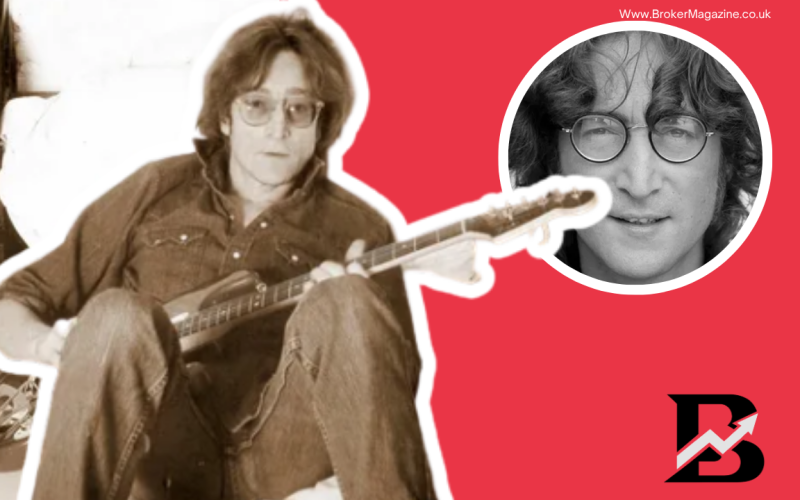
John Lennon Net Worth | His Fortune, Estate, Royalties and Inheritance
John Lennon’s wealth was already enormous when he was killed in New York in December 1980, but the financial legacy attached to his name has continued to generate substantial income for more than four decades.
Contemporary reports at the time of Lennon’s death placed his estate at roughly $235 million, while another contemporary accounting of his will valued his U.S. estate at about $30 million and his international holdings at approximately $250 million. The differences reflect the difficulty of valuing music rights, trusts, property and assets across jurisdictions rather than a single universally accepted figure.
Today, there is no publicly audited figure that establishes the exact total value of John Lennon’s estate. Frequently repeated estimates place the estate in the high hundreds of millions of dollars, but those figures should be treated as estimates rather than confirmed financial statements. What is easier to establish is that Lennon’s estate continues to earn millions through recordings, songwriting royalties, licensing, merchandise, intellectual property and interests connected with The Beatles.
The story of John Lennon’s net worth is therefore best understood in two parts: the substantial fortune he accumulated during his lifetime and the much larger long-term economic value created by the music and intellectual property he left behind.
John Lennon Net Worth at the Time of His Death
John Lennon died on December 8, 1980, at age 40. Contemporary reporting in Time estimated his estate at approximately $235 million, while UPI later reported that his international holdings were estimated at around $250 million.
Those figures should not be confused with the $200 million figure commonly quoted by modern celebrity-net-worth websites. The $200 million number is a retrospective estimate, and different sources use different definitions of “net worth,” “estate” and “assets.”
A contemporary report published after Lennon’s will became public said that his estate included more than $5.5 million in assets in England and Wales and approximately $30 million in U.S. estate assets, while the total value of his international holdings was estimated at about $250 million.
The discrepancy is understandable because Lennon’s wealth was spread across several categories:
- Music and recording income
- Songwriting and publishing royalties
- The Beatles-related business interests
- Solo recordings
- Licensing and merchandising
- Real estate
- Agricultural property
- Personal possessions and memorabilia
- Trusts and other financial arrangements
In other words, there was never one simple bank account containing “John Lennon’s net worth.”
What Was $235 Million Worth in 1980?
The purchasing power of money has changed considerably since Lennon’s death. A modern equivalent would be substantially higher than the nominal figure reported in 1980.
That is one reason readers should be careful when comparing Lennon’s wealth with modern celebrity fortunes. A $200 million fortune in 1980 represented extraordinary wealth, while a modern estimate of an estate’s value may include decades of subsequent royalties, appreciation in intellectual property and increases in real-estate values.
The two numbers describe different economic moments.
How John Lennon Made His Money
Lennon’s fortune was not created by one source. It developed from several interconnected parts of the entertainment business.
The Beatles
The Beatles were the foundation of Lennon’s financial success.
As the band’s co-founder and one of its principal songwriters, Lennon benefited from record sales, songwriting royalties and other commercial exploitation of the group’s music. His partnership with Paul McCartney produced a catalog that became one of the most commercially important bodies of popular music ever recorded.
But there is an important distinction between owning a Beatles recording and receiving songwriting income from a Beatles composition.
Those rights have followed different ownership paths over the decades.
The Beatles themselves also established Apple Corps, which remains an important part of the band’s commercial structure. Today, the company is owned by interests representing Paul McCartney, Ringo Starr, John Lennon’s estate and George Harrison’s estate.
Apple Corps generates income from activities including licensing and the use of Beatles-related intellectual property.
Lennon-McCartney Songwriting Royalties
Songwriting was particularly important to Lennon’s long-term wealth.
Many Lennon-McCartney compositions became enduring commercial properties. Songs such as “Imagine,” “Come Together,” “Strawberry Fields Forever,” “Help!” and “All You Need Is Love” continue to generate revenue through recordings, broadcasts, streaming, synchronization and other uses.
The ownership history is complicated.
The Beatles’ original publishing arrangements meant that Lennon and McCartney did not simply retain complete control of the publishing rights to every song they wrote. Northern Songs became a major part of the publishing story before the catalog ultimately passed through ATV and later Sony-related ownership.
That means the statement that “John Lennon’s estate owns the entire Beatles catalog” is inaccurate.
The estate continues to benefit from Lennon’s songwriting interests and related rights, but different Beatles assets belong to different companies and rights holders.
Solo Music
Lennon’s solo career also contributes to his financial legacy.
Following the breakup of The Beatles, he released major solo albums including John Lennon/Plastic Ono Band, Imagine, Mind Games, Walls and Bridges, Rock ‘n’ Roll and Double Fantasy.
His post-Beatles catalog has remained commercially active.
Modern reissues and expanded editions provide another source of revenue. The John Lennon Estate has worked with Universal Music on remixed and expanded editions of his albums, including the Mind Games Ultimate Collection.
These projects can generate revenue from new physical releases, digital sales, streaming, licensing and associated merchandise.
Music Royalties and Neighbouring Rights
Royalties remain one of the most important reasons Lennon’s estate continues to produce income decades after his death.
In 2024, the estate appointed Phonographic Performance Limited (PPL) to collect neighbouring-rights royalties connected with recordings on which John Lennon or Yoko Ono appear as performers.
This illustrates an important point about modern music economics: a famous recording can generate multiple categories of income.
Revenue can come from:
- Songwriting royalties
- Publishing rights
- Recorded-music royalties
- Streaming
- Radio and television broadcasts
- Public performance
- Film and television synchronization
- Commercial licensing
- Merchandise
- Name, image and likeness rights
The estate does not need to sell a major asset every year to remain commercially valuable. The catalog itself can continue producing income.
John Lennon’s Real Estate and Property Holdings
Real estate was another significant part of Lennon’s wealth.
During his lifetime, Lennon and Yoko Ono owned substantial property in Britain and the United States.
One of the best-known properties was Tittenhurst Park in Berkshire, England. Lennon and Ono bought the estate in 1969 and lived there before moving permanently to New York.
The property included a recording studio, and Lennon recorded material connected with Imagine there.
Tittenhurst did not remain part of Lennon’s estate when he died. Lennon and Ono sold it to Ringo Starr in 1973.
This distinction matters because online accounts sometimes list Tittenhurst as though it were still an asset of Lennon’s estate in 1980.
Lennon also accumulated substantial real-estate interests in the United States. The couple owned multiple apartments at New York’s Dakota building, where they lived during the final years of Lennon’s life.
Contemporary reporting also described agricultural land, dairy interests and other property holdings.
Real estate therefore formed a meaningful component of Lennon’s lifetime wealth, although the most important long-term financial assets were his music and intellectual-property interests.
The Role of Yoko Ono in John Lennon’s Estate
Yoko Ono played a central role in the administration and protection of Lennon’s legacy after his death.
She was named executrix of Lennon’s will and became the principal figure associated with the management of his estate.
Her role went far beyond simply receiving an inheritance.
Over the decades, the Lennon estate has been involved in decisions concerning:
- Music releases
- Licensing
- Lennon’s name and likeness
- Archival material
- Film and documentary projects
- Merchandise
- Copyright disputes
- Reissues and remastered recordings
- Preservation of Lennon-related cultural material
Court records also show Yoko Ono acting on behalf of the estate in legal disputes involving the use of Lennon’s name, image and artistic work.
This is one reason it is misleading to think of an entertainment estate as merely a pile of money distributed among family members. A large music estate functions more like an intellectual-property business.
Sean Ono Lennon and the Modern Lennon Legacy
Sean Ono Lennon, John Lennon and Yoko Ono’s son, has increasingly become involved in the creative stewardship of his father’s musical legacy.
That does not mean Sean personally owns every Lennon asset or that he independently controls the entire estate.
His role has increasingly involved the artistic side of Lennon projects.
For example, Sean served as producer and creative director of the Mind Games Ultimate Collection and has worked on other Lennon archival projects.
The official Lennon estate credits also show Sean working alongside Yoko Ono and professional teams responsible for legal, management, archival, media and music operations.
This distinction is useful when discussing the future of the estate: Yoko Ono has historically been the central estate figure, while Sean has increasingly participated in the creative stewardship and presentation of his father’s work.
How Much Is John Lennon’s Estate Worth Today?
This is where many online articles become overly confident.
There is no authoritative public balance sheet showing that John Lennon’s estate is worth exactly $800 million, $900 million or $1 billion.
Those figures circulate widely, but they are estimates.
Some modern publications place the estate around the $800 million mark or higher. Such estimates may attempt to account for Lennon’s continuing royalties, intellectual property, licensing, real estate and Beatles-related interests.
The problem is that several assets are difficult to value publicly.
For example, the estate’s income from a particular song does not automatically tell us what that song’s underlying rights are worth. An asset that produces millions of dollars over time could potentially be valued at a much larger amount if sold, but that does not mean its owner has that amount of cash.
There is also a risk of confusing John Lennon’s estate with Yoko Ono’s personal wealth, the combined wealth of Lennon family members, or the total economic value of the broader Beatles business.
For that reason, the safest conclusion is:
John Lennon’s estate is clearly worth hundreds of millions of dollars by widely circulated modern estimates, but its exact present-day value is not publicly verified through an audited estate statement.
The continuing income provides stronger evidence than any single headline estimate. Forbes has repeatedly included Lennon among the highest-earning deceased celebrities. In 2025, Forbes reported approximately $12 million in annual earnings attributed to Lennon.
That does not mean the estate was worth only $12 million. It represents income generated during a particular measurement period.
How John Lennon’s Estate Continues to Make Money
The longevity of Lennon’s wealth comes from the fact that his most valuable assets can be monetized repeatedly.
1. Music royalties
Recordings remain commercially active through streaming, physical releases, radio and other forms of consumption.
2. Songwriting and publishing
Lennon’s compositions continue to generate income whenever the applicable rights are exploited commercially.
3. Licensing
The Lennon name, image, artwork and music can be licensed for carefully controlled commercial and cultural projects.
4. Reissues and archival releases
Previously released albums can be remastered, expanded and repackaged with archival material.
5. Film and television
Lennon’s music and story can generate licensing income when used in documentaries, films, television programs and other productions.
6. Merchandise
Authorized products connected with Lennon and The Beatles can produce additional licensing revenue.
7. Beatles-related business interests
Lennon’s estate retains an interest in Apple Corps, meaning the commercial success of Beatles-related activities can have financial implications for the estate.
The scale of that business remains significant. Recent Apple Corps accounts reported rising revenue and profits, with the company’s shareholders—including the interests representing Lennon and George Harrison—receiving dividends.
John Lennon Estate vs. The Beatles Catalog: What Does He Actually Own?
This is one of the most misunderstood parts of Lennon’s wealth.
It is incorrect to say that Lennon’s estate owns every Beatles recording and every Beatles song.
There are several separate layers of ownership.
| Asset | General position |
|---|---|
| Lennon solo recordings | Connected to the Lennon estate and associated rights holders |
| Lennon songwriting | Generates royalties and publishing-related income |
| Lennon-McCartney compositions | Subject to complex publishing ownership and administration arrangements |
| Beatles business interests | Lennon’s estate retains an interest through Apple Corps |
| Beatles master recordings | Ownership is separate from songwriting copyrights |
| Lennon name and likeness | Managed through estate and licensing arrangements |
| Lennon archival material | Controlled through various estate, family and rights arrangements |
This separation explains why estimates of Lennon’s wealth can vary dramatically.
A music catalog is not one asset. It is a collection of copyrights, masters, publishing interests, trademarks, performance rights, licensing rights and related commercial properties.
Who Inherited John Lennon’s Money?
John Lennon’s inheritance arrangements were more complicated than the simple claim that “Yoko got everything.”
His 1979 will placed the residue of his estate into a trust established with Yoko Ono.
Contemporary reporting on the will stated that Lennon’s British assets were divided between Ono and a trust, with the trust intended to benefit his first wife, Cynthia Lennon, and his son Julian.
Julian Lennon’s situation subsequently became the subject of a lengthy legal dispute.
Julian Lennon’s Settlement
Julian Lennon, John Lennon’s first son, was not treated in the same way as Sean under his father’s estate arrangements.
Contemporary and later reports indicate that a trust had been established for Julian and Sean. After Lennon’s death, Julian challenged the estate and eventually reached a settlement with Yoko Ono in 1996.
The figure most often reported in the media was approximately £20 million.
There is an important qualification: the exact settlement amount was not publicly confirmed, and Julian himself later disputed the widely reported figure.
Consequently, it is better to describe £20 million as a widely reported estimate, not as a definitively documented payment.
This distinction matters because many websites repeat the £20 million number as though it were an undisputed fact.
Did Sean Ono Lennon Inherit More Than Julian?
The family arrangements were different, but publicly available information does not support reducing the entire inheritance story to a simple percentage split.
Sean was the son of John and Yoko and was included in the family trust arrangements. Julian’s later settlement arose from his dispute with the estate.
The precise economic value of all beneficiaries’ interests is difficult to calculate because the estate contains continuing intellectual-property assets rather than a single fixed cash inheritance.
What Happened to John Lennon’s Estate After His Death?
Lennon’s estate effectively became a long-term legacy business.
Instead of simply liquidating his assets, the estate continued to protect and commercialize his music and identity.
That strategy allowed new generations to discover Lennon’s work while producing additional income.
The pattern can be seen in major archival projects such as expanded editions of Imagine, Plastic Ono Band and Mind Games. These releases combine preservation with new commercial opportunities.
The estate has also defended Lennon-related intellectual property through legal action when necessary.
This approach helps explain why Lennon’s financial legacy has lasted so long. His most valuable assets are renewable: the same songs can be streamed, licensed, performed, broadcast and sold in new formats repeatedly.
Why John Lennon’s Estate Became More Valuable After His Death
There is an important difference between Lennon’s personal net worth in 1980 and the economic value of his legacy today.
Lennon stopped earning new income from live performances when he died. But his intellectual property did not stop producing income.
In fact, several forces have worked in the opposite direction:
- The Beatles became even more culturally established over time.
- Streaming created new ways for old music to generate revenue.
- Lennon’s solo catalog has been repeatedly reissued.
- Licensing opportunities expanded across film, television and advertising.
- The value of music copyrights increased substantially across the entertainment industry.
- Lennon’s name became an enduring cultural brand.
- Real-estate holdings and other physical assets could appreciate over time.
The result is a classic example of how an artist’s economic legacy can outlive the artist by decades.
John Lennon Net Worth: 1980 vs. Today
| Measure | Around Lennon’s death | Modern picture |
|---|---|---|
| Reported estate value | Roughly $235–$250 million in contemporary estimates | No publicly audited total |
| Music income | Already substantial | Continues through royalties and licensing |
| Beatles-related income | Major source | Still commercially significant |
| Solo catalog | Established but relatively young | Mature, repeatedly reissued catalog |
| Estate management | Yoko Ono and professional advisers | Yoko Ono remains central; Sean increasingly involved creatively |
| Real estate | Major component of lifetime wealth | Some historic properties were sold long ago; surviving holdings have different ownership |
| Public valuation | Historical estimates varied | Widely circulated estimates reach the high hundreds of millions, but remain unverified |
The most responsible answer to “What is John Lennon’s net worth?” is therefore not a single dramatic number.
The historical record supports a very large fortune at the time of his death. The modern estate is also plainly worth hundreds of millions by commonly cited estimates, but its precise value is private and cannot be established confidently from public records alone.
Frequently Asked Questions About John Lennon’s Net Worth
How much was John Lennon worth when he died?
Contemporary estimates generally placed Lennon’s estate at around $235 million to $250 million in 1980, although individual reports used different valuations and definitions of his assets.
What is John Lennon’s net worth today?
There is no publicly audited figure for the current value of Lennon’s estate. Modern estimates commonly place it in the high hundreds of millions of dollars, but figures such as $800 million or $1 billion should be treated as estimates rather than confirmed totals.
Who inherited John Lennon’s estate?
Yoko Ono was the principal beneficiary and executor associated with Lennon’s estate arrangements. His children Julian and Sean were also connected to trust arrangements, while Julian later reached a settlement with the estate following a legal dispute.
How much money did Julian Lennon receive?
A settlement reached in 1996 was widely reported as being worth approximately £20 million, but the exact figure was not publicly confirmed and Julian later disputed the reported amount.
Does John Lennon’s estate own the Beatles catalog?
No. The Beatles catalog involves multiple types of intellectual property and multiple owners and administrators. Lennon’s estate retains valuable interests connected with his songwriting and the Beatles business, but it does not own every Beatles song or recording outright.
Does John Lennon still earn money?
Yes. His estate continues to receive income associated with recordings, songwriting, licensing, publishing-related rights and other uses of his music and intellectual property.
Who manages John Lennon’s estate?
Yoko Ono has historically been the central figure in managing and protecting Lennon’s estate. Sean Ono Lennon has increasingly participated in the creative stewardship of his father’s musical legacy, particularly through archival releases and reissues.
How much does John Lennon’s estate earn each year?
There is no current publicly disclosed annual income statement covering the entire Lennon estate. Forbes has periodically estimated Lennon’s posthumous annual earnings; in its 2025 dead-celebrity ranking, it attributed approximately $12 million in earnings to Lennon.
What were John Lennon’s biggest sources of wealth?
His largest sources included The Beatles, songwriting royalties, music publishing, solo recordings, licensing, intellectual property and real estate.
Why are estimates of John Lennon’s wealth so different?
The estate includes assets that are difficult to value publicly, particularly intellectual property. Different sources may also combine or separate Lennon’s personal estate, family wealth, Apple Corps interests and the broader value of music rights.
Conclusion: John Lennon’s Wealth Was Bigger Than a Net-Worth Number
John Lennon was already extraordinarily wealthy when his life ended in 1980. Contemporary estimates put his estate at roughly a quarter of a billion dollars, supported by Beatles income, songwriting, solo music, property and other investments.
But the more interesting financial story came afterward.
His songs continued to generate royalties. His recordings were repeatedly reissued. Beatles-related businesses continued to operate. His name, likeness and artwork remained commercially valuable. And new technologies such as streaming created additional ways for older music to produce revenue.
That makes John Lennon’s net worth difficult to reduce to one precise modern number.
The strongest conclusion is that his estate has remained a major, revenue-producing music legacy worth hundreds of millions of dollars by widely circulated estimates, while the exact present-day valuation remains private.
For readers researching Lennon’s fortune, the distinction between a verified historical estate value, annual posthumous earnings and an estimated modern estate valuation is the key to understanding the numbers without overstating them.