

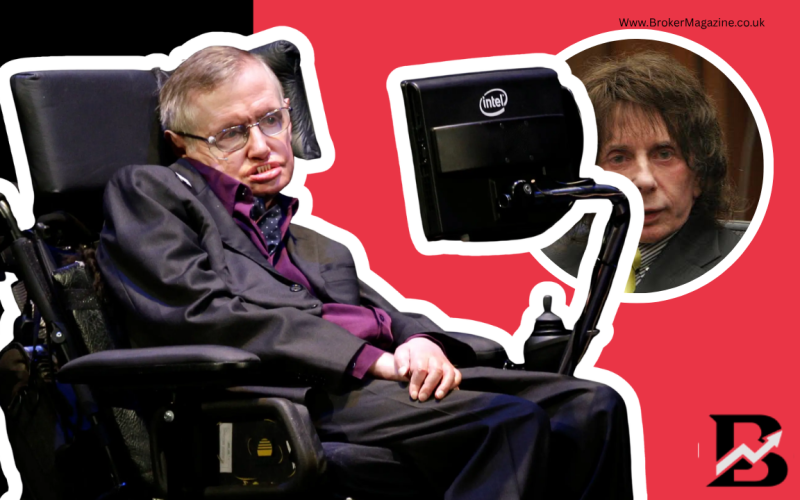
Stephen Hawking Net Worth | His £16.3m Estate Explained
Stephen Hawking’s estate was worth £16.3 million (about $20 million at the time it was reported) when details of his will became public after his death in 2018. That figure is the clearest documented basis for discussing Stephen Hawking’s net worth at death, rather than the much higher estimates sometimes repeated by celebrity-net-worth websites.
Hawking’s wealth came from several decades of academic work, publishing, public lectures, television appearances and other commercial opportunities created by his extraordinary international profile. His 1988 bestseller A Brief History of Time was particularly important: it sold millions of copies worldwide and transformed him from a distinguished Cambridge physicist into a global public intellectual.
His financial story, though, should not be confused with his scientific legacy. Hawking’s lasting importance rests on his contributions to theoretical physics and cosmology—especially his work on black holes and Hawking radiation—not on the size of his estate.
Stephen Hawking Net Worth at Death
The most reliable figure publicly associated with Hawking’s wealth is £16.3 million. Reporting in 2020 based on his 13-page will stated that the physicist left £16.3 million, equivalent to approximately $20 million at the time. The will had been signed in 2007 using Hawking’s thumbprint because his physical disability prevented him from signing in the conventional manner.
That figure is best described as the value reported in connection with his will and estate, rather than an independently calculated lifetime “net worth” estimate.
| Financial detail | Documented information |
|---|---|
| Estate reported in connection with his will | £16.3 million |
| Approximate dollar equivalent in 2020 reporting | About $20 million |
| Year Hawking died | 2018 |
| Age at death | 76 |
| Children | Robert, Lucy and Timothy |
| Will | Signed in 2007 using his thumbprint |
| Reported beneficiary structure | Trust arrangements involving his children and grandchildren |
| Personal assistant’s reported bequest | £10,000 |
It is worth being cautious with websites that give substantially different figures. A celebrity net-worth estimate can combine assumptions about lifetime earnings, book royalties, intellectual property and future income that are not the same thing as the value of an estate at death.
Why £16.3 million is a better benchmark
Hawking was extraordinarily famous, but fame does not automatically translate into an enormous personal fortune. He spent most of his career in academia, and his wealth accumulated gradually rather than through ownership of a major commercial company.
His bestselling books undoubtedly changed his financial position. A contemporary Guardian profile noted that A Brief History of Time helped turn him into a millionaire and allowed him to afford a much larger care team.
His estate was also affected by taxation and the treatment of important archival material. In 2021, Hawking’s family and representatives transferred his scientific archive to Cambridge University Library and the contents of his office to the Science Museum in arrangements that settled £4.2 million in inheritance tax.
How Stephen Hawking Built His Wealth
Hawking’s finances came from a mixture of conventional academic income and unusually successful intellectual property.
1. Academic positions at Cambridge
Hawking’s principal professional career was at the University of Cambridge.
He arrived at Cambridge as a PhD student in 1962 and subsequently built an academic career that included positions in gravitational physics before becoming the Lucasian Professor of Mathematics in 1979. He held the prestigious chair until 2009 and then continued at Cambridge in research leadership roles until his death.
The Lucasian chair has a particularly distinguished history. It was previously held by Isaac Newton, making Hawking one of the most recognizable holders of the professorship.
Academic employment provided a long-term professional income, but it is unlikely to have been the single factor responsible for the bulk of his later wealth. His financial position changed dramatically after his books became international successes.
2. A Brief History of Time
The most significant commercial turning point was the publication of A Brief History of Time in 1988.
The book explained subjects including cosmology, black holes and the nature of time for general readers. Cambridge records describe it as a surprise bestseller that remained on the Sunday Times bestseller list for 237 weeks. Gonville & Caius College records say it ultimately sold more than 25 million copies and was translated into roughly 40 languages.
Other historical accounts use somewhat different sales totals depending on the publication date and edition being discussed. The Guardian, for example, reported that the book had sold more than 10 million copies in an earlier account.
The important financial point is not one particular sales estimate. It is that A Brief History of Time became an exceptional publishing phenomenon, generating royalties and establishing Hawking as a commercially valuable author.
His later books included:
- Black Holes and Baby Universes
- The Universe in a Nutshell
- A Briefer History of Time
- My Brief History
- Brief Answers to the Big Questions
- The children’s George series, co-written with his daughter Lucy Hawking
Hawking’s official biography records that his popular science books expanded his public profile far beyond the academic world.
3. Book royalties and publishing rights
Royalties were an important potential source of Hawking’s wealth, particularly after A Brief History of Time became a worldwide bestseller.
It is difficult, however, to give a reliable lifetime royalty total. Publishing contracts are private, and the number of copies sold does not directly reveal the author’s income. Retail prices, publisher discounts, editions, territories, advances, agent commissions, taxes and contractual royalty rates all affect the amount ultimately received by an author.
For that reason, claims that Hawking personally earned a specific enormous sum from A Brief History of Time should be treated cautiously unless supported by documentary evidence.
What can be established is that the book became a global bestseller and that Hawking’s financial circumstances improved substantially following its success.
4. Lectures, appearances and public engagements
Hawking’s celebrity also created opportunities outside conventional academic employment.
He was in demand for public lectures, conferences, interviews and media appearances. A 1999 Guardian profile described the constant demand surrounding his public lectures, conferences and interviews.
He also appeared in popular culture, including The Simpsons, Star Trek and other television and film projects. Cambridge describes him as becoming known worldwide through his books, television appearances and lectures as well as his scientific work.
That does not mean every appearance generated a large personal payment. Public appearances can involve promotional, academic, charitable or media arrangements, and reliable records do not provide a complete lifetime total for Hawking’s speaking income.
The Role of Gonville and Caius College
Gonville and Caius College, commonly called Caius, was central to Hawking’s professional and personal life.
He became a Fellow of the College in 1965 and remained associated with it for more than five decades. The College also provided practical support as his disability progressed, including adaptations that helped him continue working and living in Cambridge.
The connection is relevant to Hawking’s financial story because his career was not simply that of a celebrity author. He remained an active academic throughout the period in which he became internationally famous.
Indeed, Caius records that he wrote A Brief History of Time while living in a house adapted by the College for him and his family.
Stephen Hawking’s Will and Estate
Hawking’s will was signed in 2007, more than a decade before his death.
According to reporting published in 2020, the 13-page will placed his fortune into a trust structure for his three children and three grandchildren. The report also stated that Hawking left £10,000 to his personal assistant Judith Croasdell.
His children are:
- Robert Hawking
- Lucy Hawking
- Timothy Hawking
The will also addressed Hawking’s academic honours and medals. Reporting said these were to be divided among his three children.
Was Hawking’s money divided equally among his children?
There is an important distinction between saying that Hawking’s children benefited from his estate and claiming that each child received exactly one-third.
Public reporting confirms that the estate was placed into trust arrangements benefiting his children and grandchildren, but that does not provide enough evidence to state confidently that the entire £16.3 million was divided into three equal shares.
The precise financial terms of private trust arrangements are not fully disclosed in the publicly available sources used for this article.
That is why statements such as “each child inherited £5.43 million” should not be presented as established fact.
Did Hawking leave money to his grandchildren?
Yes. Reporting on the will stated that the trust arrangement covered Hawking’s three children and three grandchildren.
The available reporting does not justify assigning a precise amount to each grandchild.
What Happened to Hawking’s Scientific Archive?
Not everything associated with Hawking’s legacy was treated simply as personal property to be sold or divided among heirs.
His archive contained scientific papers, correspondence, photographs, drafts of A Brief History of Time and other personal and professional material. The Hawking family transferred the archive to Cambridge University Library, where it was catalogued and made available to researchers.
His former office and possessions were acquired by the Science Museum.
These arrangements were also financially significant because the transfers helped settle inheritance-tax liabilities. The office contents accounted for £1.4 million of tax and the archive for £2.8 million, according to reporting on the agreement.
This illustrates why the value of Hawking’s estate should not be understood simply as cash sitting in a bank account. His estate included intellectual, historical and physical assets with different values and legal treatment.
Stephen Hawking’s Scientific Legacy vs. His Financial Legacy
Hawking’s net worth is relatively straightforward to quantify compared with his scientific influence.
His financial legacy
Financially, Hawking left an estate reported at £16.3 million. His wealth was built through a combination of:
- Academic employment and research positions
- Book royalties
- Publishing rights
- Public lectures and engagements
- Television and media appearances
- Other opportunities created by his international reputation
The precise contribution of each category is not publicly documented in a complete financial breakdown.
His scientific legacy
Scientifically, Hawking’s impact was vastly broader.
He made major contributions to the understanding of black holes, cosmology and the relationship between gravity, quantum mechanics and thermodynamics. His work led to the theoretical prediction now known as Hawking radiation. Cambridge describes his research as groundbreaking work on the basic laws governing the universe.
He also helped make advanced scientific ideas accessible to millions of non-specialists.
That distinction matters when discussing his “legacy”: the £16.3 million figure describes an estate, while the influence of his scientific work cannot meaningfully be reduced to a monetary number.
Did Stephen Hawking Make Most of His Money From Books?
Books were probably the most important commercial component of Hawking’s public career, but it would be inaccurate to claim that his entire fortune came from A Brief History of Time.
His income developed over decades. He had a long academic career at Cambridge, became a highly sought-after public figure and published multiple books.
The scale of A Brief History of Time is nevertheless difficult to overstate. It remained on the British bestseller list for 237 weeks, became an international publishing success and introduced Hawking’s ideas to an audience far beyond professional physicists.
A useful way to understand his finances is therefore:
Academic career → scientific reputation → bestselling books → global public profile → additional publishing and media opportunities.
The chain is more informative than assigning an unsupported percentage of his wealth to any one source.
Why Some Stephen Hawking Net Worth Estimates Are Much Higher
Online estimates can differ dramatically because “net worth” is not always being used in the same way.
Some websites estimate what Hawking’s wealth might have been based on book sales, media work and projected royalties. Others may use figures that are not tied to his actual estate.
For a person who died in 2018, the most defensible historical figure is the documented estate value associated with his will: £16.3 million.
It should not be confused with:
- Total revenue generated by his books.
- The value of all Hawking-related intellectual property.
- Future royalties earned after his death.
- The cultural value of his scientific work.
- The value of archives donated or transferred for public benefit.
Those are different financial and historical measurements.
Stephen Hawking Net Worth: Key Facts
| Question | Answer |
|---|---|
| How much was Stephen Hawking worth when he died? | His estate was reported at £16.3 million, approximately $20 million in contemporary reporting. |
| When did Hawking die? | 14 March 2018, aged 76. |
| What was his biggest commercial success? | A Brief History of Time, published in 1988. |
| How many children did he have? | Three: Robert, Lucy and Timothy. |
| Where did he work? | Primarily at the University of Cambridge, including as Lucasian Professor of Mathematics. |
| Which Cambridge college was he associated with? | Gonville and Caius College, where he was a Fellow for more than 50 years. |
| Did his will create a trust? | Public reporting said his fortune was placed in a trust arrangement benefiting his children and grandchildren. |
| Was the estate divided equally among the children? | No publicly available evidence used here establishes equal one-third shares. |
| Did his estate include his scientific archive? | His archive was transferred to Cambridge University Library as part of arrangements involving inheritance tax. |
Frequently Asked Questions
What was Stephen Hawking’s net worth when he died?
The most clearly documented figure is £16.3 million, reported in connection with his 2007 will after his death. Contemporary reporting put the amount at approximately $20 million.
How did Stephen Hawking make his money?
Hawking earned money through his long academic career, book royalties and publishing, public lectures and appearances, and other opportunities associated with his international reputation. His bestselling A Brief History of Time was particularly significant.
How much did Stephen Hawking earn from A Brief History of Time?
There is no sufficiently reliable public record establishing his total personal earnings from the book. Its enormous sales demonstrate that it generated substantial commercial value, but sales cannot be converted directly into Hawking’s personal royalties without knowing the terms of his publishing agreements.
Who inherited Stephen Hawking’s money?
Public reporting on Hawking’s will said that his fortune was placed into a trust benefiting his three children—Robert, Lucy and Timothy—and his three grandchildren. The reporting does not establish a precise amount received by each beneficiary.
Did Stephen Hawking leave a will?
Yes. His 13-page will was signed in 2007 using his thumbprint because his physical disability prevented him from signing in the usual manner.
Did Stephen Hawking leave money to his assistant?
Reporting on the will stated that he left £10,000 to personal assistant Judith Croasdell.
What happened to Stephen Hawking’s academic awards?
Reporting on the will said that Hawking directed that his academic awards and medals be divided among his three children. Some of his professional papers, office contents and archive were subsequently transferred to public institutions.
Was Stephen Hawking a millionaire before A Brief History of Time?
The book’s success clearly changed his financial circumstances. A Guardian account described him as becoming a millionaire after the book’s extraordinary success, while his academic career had already provided his professional foundation.
Was Stephen Hawking’s estate worth more than £16.3 million?
The £16.3 million figure is the documented estate figure most directly connected to his will in widely reported accounts. Different online estimates may produce higher numbers because they use assumptions about intellectual property, royalties or future earnings rather than the documented estate value. The figures should not be treated as interchangeable.
Conclusion: Stephen Hawking’s Wealth Was Only One Part of His Legacy
The clearest answer to Stephen Hawking’s net worth question is £16.3 million at the time his will and estate were reported, roughly $20 million in the contemporary dollar conversion.
That wealth was accumulated over a long career rather than through a single source. Cambridge academic positions provided the professional foundation; A Brief History of Time and his later books created major publishing income; and his global reputation opened the door to lectures, television and other public engagements.
His will placed his wealth into trust arrangements benefiting his family, while his scientific archive and other historically significant materials were preserved through Cambridge University Library and the Science Museum.
But the most important distinction is between financial value and scientific value. Hawking left millions of pounds to his family, but his greater legacy is the body of scientific work and public education that helped generations of people think differently about black holes, cosmology, time and the universe.