

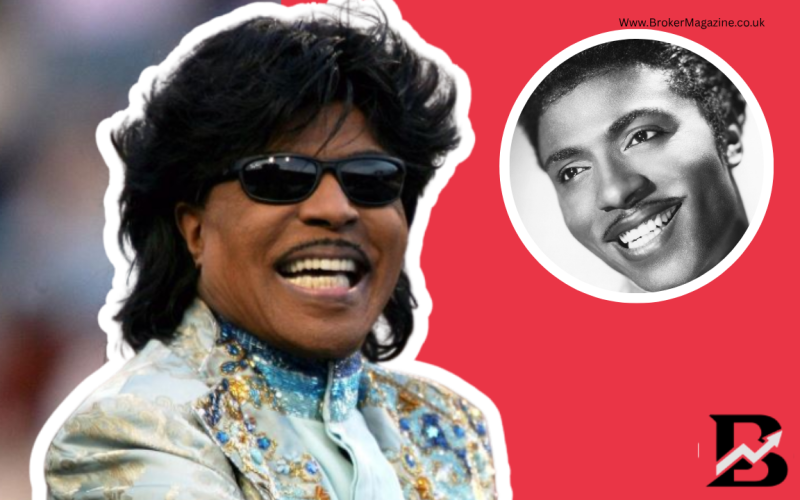
Little Richard Net Worth | What His Estate Was Worth at Death
Little Richard, born Richard Wayne Penniman, died on May 9, 2020, at age 87 after a career that helped define rock and roll. His music generated substantial commercial value, but the amount of wealth he personally retained was far harder to establish than his cultural impact.
So, what was Little Richard’s net worth when he died? There is no authoritative, publicly disclosed figure from an audited estate inventory. Online estimates commonly place his wealth in the low millions, including figures around $1.5 million to $2 million, but that range should be treated as an estimate rather than a verified probate valuation. The Tennessee court record later confirmed that his estate included significant music-related intellectual property and publicity rights, while noting that important valuation and disposition information was sealed.
That distinction matters. Little Richard’s financial story cannot be understood simply by attaching a number to his name. He became one of the foundational figures of rock and roll during the 1950s, yet early recording contracts limited what he received from some of his most valuable work. Decades later, his name, likeness, compositions, recordings and other intellectual-property interests remained valuable enough to attract a major acquisition proposal.
What Was Little Richard’s Net Worth at the Time of His Death?
The safest answer is that Little Richard’s exact net worth at death is not publicly verified.
A number of celebrity-finance websites have published estimates ranging from roughly $1 million to tens of millions of dollars. Those figures vary so widely that presenting one as an established fact would be misleading.
The frequently repeated $1.5 million-$2 million range can be used as a reported estimate, but it should not be described as the confirmed value of the Little Richard estate. The later Tennessee probate litigation makes the situation even clearer: the court specifically stated that matters involving the valuation and disposition of estate assets were placed under seal.
| Question | Best-supported answer |
|---|---|
| Little Richard’s exact net worth at death | Not publicly verified |
| Frequently reported estimate | About $1.5 million-$2 million |
| Date of death | May 9, 2020 |
| Age at death | 87 |
| Major estate assets | Music-related rights, royalties and publicity rights |
| Probate valuation | Important valuation details were sealed |
| Will | Yes; executed June 24, 2011 |
| Named beneficiaries | Nine |
| Later rights negotiations | Included an offer from Primary Wave |
The important takeaway is that an estimated net worth is not the same thing as an appraised estate value. Net-worth websites generally work from incomplete public information, while probate proceedings can involve assets, liabilities, contractual rights and intellectual property that are difficult to value from the outside.
Why Little Richard’s Wealth Is Difficult to Calculate
Little Richard’s finances were unusually complicated because his career began during a period when Black performers often had far less negotiating power than the commercial success of their music suggested.
His breakthrough came in 1955 with “Tutti Frutti,” followed by major records including “Long Tall Sally,” “Rip It Up,” “Lucille” and “Good Golly, Miss Molly.” PBS’s American Masters describes his 1950s rise as a pivotal moment in the development of rock and roll and notes the influence he later had on artists ranging from the Beatles and Rolling Stones to David Bowie, Elton John, Michael Jackson and Prince.
But commercial success did not automatically translate into ownership.
According to reporting by Forbes, Specialty Records owner Art Rupe reportedly acquired the rights to “Tutti Frutti” for $50, while Little Richard’s contract provided only half a cent for each record sold. Forbes also reported that by the time the song had sold 500,000 copies, Richard had earned about $25,000 from it.
The numbers illustrate the central contradiction in his financial history: Little Richard could create enormous cultural and commercial value without retaining an equivalent share of it.
Little Richard’s Peak Earnings Era: 1955-1957
The breakthrough with “Tutti Frutti”
Richard’s financial trajectory changed dramatically when he joined Specialty Records and recorded “Tutti Frutti” in New Orleans.
The song became a major crossover success. His subsequent run of hits established him as one of the biggest performers of the early rock-and-roll era.
Biography.com records the sequence of hits that followed, including “Long Tall Sally,” “Good Golly Miss Molly” and “Send Me Some Lovin’.”
Yet the recording contracts of the period limited his participation in the long-term economic value of those songs.
Touring was another major source of income
Little Richard was not solely dependent on record sales. His explosive stage performances made him a major live attraction, and touring became an important part of his career.
AllMusic notes that despite his restrictive recording and publishing agreements, his performance fees made him wealthy during his career.
That distinction helps explain why a musician could become a genuine star while still having a surprisingly modest documented personal fortune.
The Cost of Early Music Contracts
Little Richard’s financial history is also part of a much larger story involving Black musicians in the American recording industry.
During the 1950s, Black artists frequently operated under contracts that transferred significant recording or publishing rights to labels. Little Richard’s experience has become one of the clearest examples of how the economics of early rock and roll could separate the person creating the music from the people controlling its commercial exploitation.
Forbes reported that his Specialty agreement paid a much smaller royalty rate than those commonly received by white artists and that he did not receive royalties when his songs were used in some films or covered by white performers.
PBS likewise documents the reported $50 purchase of the rights to “Tutti Frutti” and the half-cent-per-record royalty arrangement.
The historical context is important because modern estimates of Little Richard’s wealth can otherwise create the wrong impression. A performer can have millions of records sold and still fail to accumulate wealth proportional to those sales when ownership, publishing and royalty arrangements are unfavorable.
Little Richard’s Royalty Battles
Little Richard did not simply accept those arrangements.
He challenged Specialty Records over royalties and rights during his lifetime. The dispute was not an isolated financial disagreement; it reflected his growing awareness of how much economic value had been generated from recordings associated with him.
The Los Angeles Times reported that Richard had sued Specialty over unpaid royalties as early as 1959 and that the dispute was settled for $11,000. The publication also noted that Specialty’s contracts could give the label control over publishing royalties and rights.
In 1984, Richard sued three record companies, alleging that he had not received royalties dating back to the 1950s. PBS reports that the case eventually settled for an undisclosed amount.
Those legal battles are essential to understanding his eventual finances. They demonstrate that the value of his music was not necessarily reflected in the income he actually received.
Little Richard’s Career After His 1950s Peak
Richard’s career did not end when his initial run of rock-and-roll hits declined.
At the height of his early success, he stepped away from rock and roll and devoted himself to religion. PBS’s career timeline places this transition in 1957, when Richard left secular rock music and pursued gospel work.
He later returned to secular performance and remained active for decades.
His career subsequently included:
- Gospel recording and preaching
- Rock-and-roll revival performances
- International touring
- Television appearances
- Film appearances
- Festival and concert performances
- Speaking and public appearances
- Continued exploitation of his music and personal brand
That long career meant his finances were not frozen in the 1950s. He continued generating income long after his original hits had been released.
Little Richard’s Later Years and Financial Legacy
By the 1980s and 1990s, Little Richard had become more than a former hitmaker. He was recognized as one of the architects of rock and roll.
He was inducted into the Rock & Roll Hall of Fame in 1986 and received a Grammy Lifetime Achievement Award in 1993. PBS also notes his later induction into the Songwriters Hall of Fame in 2003.
His continuing public profile gave his name and likeness independent economic value.
That distinction became particularly important after his death because the Little Richard estate was not limited to whatever money happened to be held in bank accounts. His will addressed royalties and rights connected to songs, recordings, compositions, and the commercial use of his name, image and likeness.
What Was in the Little Richard Estate?
The public probate record provides a much clearer picture of the types of assets involved than of their exact dollar value.
Little Richard’s June 24, 2011, will named nine beneficiaries. It provided for the beneficiaries to receive rights connected to royalties and compensation from songs, compositions and recordings, as well as rights involving his name, likeness and image.
The will also contained detailed provisions for managing his publicity rights.
Rather than allowing each beneficiary to independently commercialize those rights, the will envisioned a joint management structure. It encouraged the beneficiaries to establish a Tennessee LLC or another suitable entity to manage and exploit the publicity rights for their collective benefit.
This is significant because Little Richard’s estate had intellectual-property value that cannot be captured by a simple celebrity net-worth estimate.
Music rights versus publicity rights
These concepts are related but not identical.
Music rights can include interests connected with songs, compositions, recordings and royalties.
Publicity rights concern the commercial use of a person’s identity, including their name, photograph and likeness.
Little Richard’s will specifically addressed both categories.
For an estate built around a legendary performer, the second category can become particularly valuable after death. Licensing a name, image or likeness can generate revenue through documentaries, merchandise, advertising, entertainment projects, memorabilia and other commercial uses.
Who Inherited Little Richard’s Estate?
Little Richard died with a will, rather than leaving his estate to be distributed solely under Tennessee’s intestacy rules.
The Tennessee Court of Appeals confirmed that his will, executed in 2011, named nine beneficiaries. Two of the people specifically identified in the appellate opinion were his brother Peyton Penniman and his sister Freka Merrell.
The will also named Peyton Penniman, Freka Merrell and Little Richard’s longtime agent and personal attorney, William R. Sobel, as co-personal representatives.
It is more accurate to call these people will beneficiaries than simply “heirs.” The legal distinction matters because beneficiaries receive property under the terms of a will, while “heirs” can refer more broadly to people entitled to inherit under applicable succession law.
What Happened to Little Richard’s Estate After His Death?
The estate became involved in a significant dispute over the management of his intellectual-property and publicity rights.
In November 2020, several months after Richard’s death, the beneficiaries received an offer from Primary Wave to acquire the estate’s intellectual-property rights in his music and the exclusive right to exploit his publicity rights.
The proposed arrangement included a lump-sum payment plus a percentage of net earnings from exploitation of the publicity rights.
Five of the nine beneficiaries voted in May 2021 to proceed with the offer, subject to negotiations intended to improve the terms.
A dispute followed.
Peyton Penniman opposed the proposed transaction. After he communicated his objections in an email that was also sent to at least one Primary Wave employee, the company withdrew its offer. The trial court subsequently removed him as a co-personal representative and ruled that he had forfeited his share of the publicity rights under the terms of the will.
The Tennessee Court of Appeals affirmed the decision in September 2024.
The case provides unusually valuable information about the estate because it confirms that the intellectual-property and publicity rights were substantial enough to attract a professional music-publishing offer.
The exact valuation, though, remains unavailable publicly because important valuation and disposition information was sealed.
Did Little Richard Own His Music Publishing Rights?
Not all of them.
This is one of the most misunderstood parts of Little Richard’s financial story.
Early in his career, he surrendered important rights under recording and publishing arrangements. The reported $50 transaction involving “Tutti Frutti” is the clearest illustration of how dramatically the economics of his early work differed from the modern music-rights market.
Consequently, it would be inaccurate to assume that every dollar generated by a Little Richard recording eventually went to Little Richard or his estate.
At the same time, the estate clearly possessed meaningful intellectual-property interests decades later. The 2024 appellate record specifically refers to rights involving songs, compositions, recordings, royalties and publicity.
The most accurate conclusion is therefore:
Little Richard had important music-related rights, but he did not retain complete ownership of everything he created during his career.
Why Little Richard Wasn’t as Wealthy as His Influence Suggests
The gap between Little Richard’s cultural influence and his reported personal wealth is one of the most revealing parts of his financial history.
He helped establish the vocabulary of rock and roll. His records influenced the Beatles, the Rolling Stones, Elvis Presley, David Bowie, Prince, Elton John and many other performers.
Yet the economics of the 1950s music industry worked against him.
Several factors help explain the discrepancy:
- Unfavorable early contracts limited his royalty income.
- Publishing rights were surrendered or controlled by other parties in important parts of his early catalog.
- Black artists faced structural discrimination in the American music business of the period.
- Cover versions could generate substantial commercial value for other performers.
- His career moved through periods of withdrawal and reinvention, rather than following the uninterrupted commercial trajectory of some later superstars.
- His estate’s most valuable assets were difficult to value publicly, particularly intellectual-property and publicity rights.
A 2020 Forbes retrospective described the situation bluntly: Little Richard’s commercial achievements were enormous, but the music industry’s racial structure and his early record deal prevented him from fully benefiting from them.
Little Richard Net Worth: Peak Years vs. Later Years
| Period | Career position | Main financial significance |
|---|---|---|
| Early 1950s | Emerging R&B performer | Record contracts and live work established his career |
| 1955-1957 | Peak rock-and-roll breakthrough | Major hits and extensive performances generated substantial income |
| Late 1950s-1960s | Religious transition and changing music career | Less emphasis on secular rock; gospel became prominent |
| 1970s | Touring and periodic recording | Continued performance income and renewed public appearances |
| 1980s-1990s | Major comeback and legacy recognition | Touring, television, film and renewed interest in his catalog |
| 2000s-2010s | Legacy performer | Continued appearances and value from music, name and likeness |
| 2020 | Death and estate administration | Music, royalty and publicity rights became central estate assets |
The timeline explains why a single number can be deceptive. Little Richard’s earning power changed considerably throughout his seven-decade career.
The Broader History of Black Artists and Lost Royalties
Little Richard’s experience was not unique.
The early American music business operated within a deeply segregated society. Black performers created music that frequently crossed over into the mainstream, while the financial structures around recording, publishing, distribution and promotion could leave much of the commercial upside in the hands of labels, publishers and other intermediaries.
His story is particularly striking because white performers could record versions of songs first made famous by Black artists and reach larger mainstream audiences.
The New Yorker, discussing Little Richard’s life and legacy, described the enormous gap between what he accomplished and what he received financially. It also highlighted the broader pattern of white record companies profiting from Black musicians operating under unequal economic conditions.
Academic discussion of Little Richard has similarly connected his career to the wider history of racism and exploitation in the music industry.
That history provides necessary context for any serious discussion of his net worth. His final financial position was shaped not only by how many records he sold, but by who owned the rights, what his contracts said, and how the industry treated Black artists during the period when those contracts were signed.
What Little Richard’s Estate Tells Us About Music Rights
The later estate dispute also illustrates a broader change in the music business.
During Little Richard’s lifetime, ownership of music rights could be difficult for performers to maintain. By the time of his death, however, music catalogs and celebrity intellectual property had become major investment assets.
The Primary Wave proposal demonstrates that Little Richard’s legacy had financial value beyond traditional record royalties. The proposed transaction involved both music-related intellectual property and publicity rights, with compensation structured around an upfront payment and future earnings.
This is why the value of the Little Richard estate should not be confused with a celebrity net-worth number copied from an online database.
An estate can own rights whose value depends on future licensing, royalties, catalog exploitation and commercial use. Those assets can be worth considerably more—or less—than a person’s liquid wealth at the moment of death.
Frequently Asked Questions About Little Richard’s Net Worth and Estate
What was Little Richard’s net worth when he died?
There is no independently verified public figure for his exact net worth at death. Estimates commonly repeated online include approximately $1.5 million to $2 million, but those numbers should be treated as estimates rather than an official probate valuation. The later Tennessee court record confirms that significant estate valuation information was sealed.
When did Little Richard die?
Little Richard died on May 9, 2020, at the age of 87. His full name was Richard Wayne Penniman.
Did Little Richard leave a will?
Yes. His Last Will and Testament was executed on June 24, 2011. The will named nine beneficiaries and included detailed provisions governing royalties, intellectual property and publicity rights.
Who inherited Little Richard’s estate?
His will named nine beneficiaries. The public appellate record specifically identifies his brother Peyton Penniman and sister Freka Merrell among them. The will also addressed rights to royalties, compositions, recordings and the commercial use of his name, likeness and image.
Did Little Richard’s family manage his estate?
Initially, his brother Peyton Penniman, sister Freka Merrell and longtime attorney William R. Sobel were appointed as co-personal representatives. After subsequent litigation, Sobel resigned and Peyton Penniman was removed, leaving Freka Merrell as the sole remaining personal representative according to the appellate record.
What happened to Little Richard’s music rights after his death?
The estate received an offer from Primary Wave to acquire intellectual-property rights in his music and exclusive rights to exploit his publicity rights. Five of the nine beneficiaries voted to proceed with the offer, but a dispute led to Primary Wave withdrawing it. The resulting estate litigation was ultimately reviewed by the Tennessee Court of Appeals.
Did Little Richard own the rights to “Tutti Frutti”?
He did not retain complete control over the song’s publishing rights under the original Specialty arrangement. Reporting from Forbes and PBS states that the rights to “Tutti Frutti” were reportedly acquired for $50, while Richard received a very small royalty per record sold.
Why was Little Richard’s wealth relatively modest compared with his fame?
His early recording and publishing agreements limited his share of the money generated by his music. He also worked through periods away from secular rock music. His financial story therefore reflects both the success of his performances and the economic disadvantages faced by many Black artists in the early music industry.
Was Little Richard a millionaire?
It is reasonable to describe Little Richard as having accumulated substantial personal wealth during his long career, but the exact size of his fortune at death is not firmly established in public records. Claims of a precise figure should therefore be treated cautiously.
Conclusion: Little Richard’s Legacy Was Worth More Than a Net-Worth Figure
The question of Little Richard’s net worth has a surprisingly complicated answer.
A figure of $1.5 million to $2 million is often repeated as an estimate of what he was worth around the time of his May 2020 death, but it should not be presented as a verified estate valuation. The strongest public evidence instead shows that his estate contained meaningful music, royalty, intellectual-property and publicity rights, while key valuation details were kept under seal.
His financial history also reveals something larger than a celebrity balance sheet. Little Richard helped create the sound and performance language of rock and roll, yet early contracts prevented him from capturing the full economic value of some of his most influential work.
The Little Richard estate ultimately became a case study in the continuing value of a musical legacy: decades after “Tutti Frutti” changed popular music, his songs, identity and publicity rights were still valuable commercial assets.
For researchers and music fans, that may be the most important financial lesson of Little Richard’s career. His documented fortune was only one measure of his success; the lasting value of the intellectual and cultural property he helped create was far greater.