

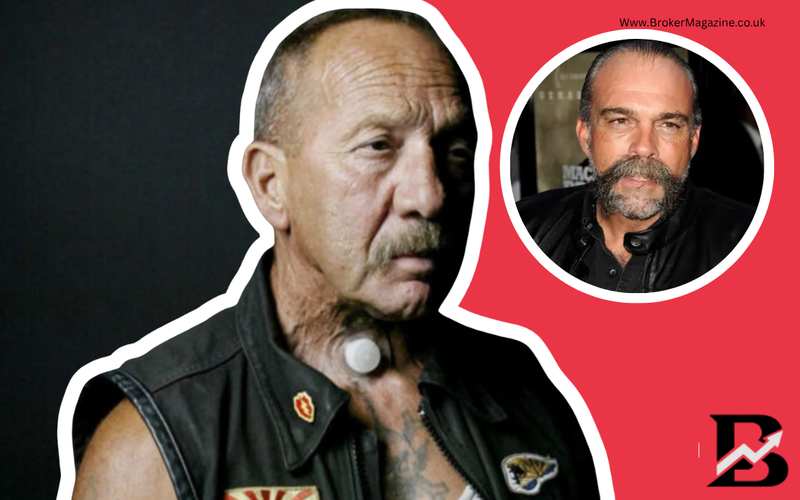
Sonny Barger Net Worth | How Much Was the Hells Angels Icon Worth?
Sonny Barger’s estimated net worth was $500,000 at the time of his death on June 29, 2022, according to Celebrity Net Worth. That figure should be treated as an estimate rather than an independently verified estate valuation; there is no widely reported public probate accounting establishing a definitive total.
Barger’s finances are especially interesting because his public reputation suggested a much larger fortune. For decades, he was one of the most recognizable figures associated with the Hells Angels Motorcycle Club, but notoriety did not automatically translate into enormous personal wealth. His documented income later came from more conventional sources: books, motorcycle businesses, film and television appearances, merchandise, and commercial uses of his name and image.
That distinction matters when assessing Sonny Barger’s net worth. The wealth associated with an outlaw motorcycle organization should not be confused with an individual member’s personal assets.
Sonny Barger Net Worth at a Glance
| Detail | Information |
|---|---|
| Estimated net worth at death | $500,000 |
| Full name | Ralph Hubert “Sonny” Barger Jr. |
| Born | October 8, 1938 |
| Died | June 29, 2022 |
| Age at death | 83 |
| Known for | Hells Angels, author, actor, motorcycle personality |
| Oakland Hells Angels chapter | Co-founded in 1957 |
| Major book | Hell’s Angel |
| Television role | Lenny “The Pimp” Janowitz on Sons of Anarchy |
| Later residence | Arizona |
| Cause of death | Cancer |
The $500,000 figure comes from a celebrity wealth estimate, not a disclosed balance sheet. That is an important qualification because online net-worth figures are often presented with more certainty than the underlying evidence warrants.
Who Was Sonny Barger?
Ralph “Sonny” Barger became the best-known public figure associated with the Hells Angels.
In 1957, Barger and other riders established the Oakland chapter of the Hells Angels. He soon became a prominent leader within the organization and helped move its center of influence toward Oakland. CBS reported that Barger became the club’s national president in 1958 after founder Otto Friedli went to prison.
For decades, journalists and law-enforcement officials described Barger as the Hells Angels’ national or international leader, although Barger himself sometimes disputed the idea that he occupied a formal worldwide presidency. His importance to the organization was nevertheless difficult to separate from its public image.
The Washington Post described him as the founder of the original Oakland chapter and the public face of the Hells Angels counterculture.
His celebrity was unusual. Barger wasn’t famous because of conventional entertainment success. His reputation came from a combination of:
- Leadership within the Hells Angels
- Encounters with law enforcement
- Motorcycle culture
- Media coverage
- Books about his life
- Film appearances
- Later television work
- Merchandise and commercial use of his name
That notoriety eventually became a commercial asset.
How Sonny Barger Made Money
Barger’s later income was considerably more diverse than the stereotype of an outlaw biker might suggest.
1. Book Sales
Books became one of Barger’s most clearly documented legitimate sources of income.
His 2000 autobiography, Hell’s Angel: The Life and Times of Sonny Barger and the Hell’s Angels Motorcycle Club, became a bestseller and appeared on the New York Times bestseller list. The Washington Post documented large crowds attending bookstore events for the book, while the Los Angeles Times later reported that Barger had sold hundreds of thousands of books worldwide.
His publishing career included:
- Hell’s Angel
- Ridin’ High, Livin’ Free
- Freedom: Credos from the Road
- Dead in 5 Heartbeats
- 6 Chambers, 1 Bullet
- Let’s Ride: Sonny Barger’s Guide to Motorcycling
Some were memoir or motorcycle-oriented nonfiction, while Dead in 5 Heartbeats and 6 Chambers, 1 Bullet were novels featuring the fictional biker Patch Kinkade. Google Books and Kirkus document the publication history of several of these works.
The importance of publishing to Barger’s finances is unusually well documented. In a 2010 Los Angeles Times interview, he said he was making a better living than ever and attributed substantial earnings to his books. The newspaper reported that he said he had paid $500,000 in taxes from book income.
That does not mean he earned $500,000 in book royalties; taxes and income are different measurements. But it does demonstrate that his writing career was financially significant.
2. Film and Television Appearances
Barger had been connected to motorcycle films long before Sons of Anarchy.
He appeared in or contributed to productions including Hells Angels on Wheels, Hell’s Angels ’69, and the documentary Gimme Shelter. The Washington Post also noted his work as a technical consultant on biker movies.
His best-known later television connection was FX’s Sons of Anarchy, where he played Lenny “The Pimp” Janowitz, a character associated with the fictional Sons of Anarchy Motorcycle Club.
Barger appeared in the series between 2010 and 2012. Apple TV’s program listing confirms his appearances in episodes of the show.
It is reasonable to regard acting and appearance fees as part of his later commercial income, but the exact amount Barger earned from Sons of Anarchy has not been reliably disclosed in the sources reviewed. It would therefore be misleading to assign him a specific salary.
3. Brand Licensing and Merchandise
Barger’s name eventually became a commercial brand in its own right.
A 2002 Publishers Weekly report described products connected to his name, including a Sonny Barger signature guitar, Sonny Barger Premium Lager, T-shirts, pins and stickers.
Earlier reporting from the Los Angeles Times also documented T-shirts carrying his likeness and a Sonny Barger-branded Cajun-style salsa.
The commercialization continued beyond individual products. U.S. trademark records show Sonny Barger Productions had trademark protection covering areas such as:
- Books
- Hats
- T-shirts
- Sweatshirts
- Personal appearances
- Entertainment services
- Film and television-related entertainment
The trademark records identify Sonny Barger Productions Inc. as the owner.
His official estate-associated website also continues to sell books and merchandise carrying his name and imagery.
This provides a useful explanation for how Barger could continue generating commercial value from his public identity without needing to rely on illegal activity.
4. Motorcycle Businesses
Motorcycles were not merely part of Barger’s image; they were also connected to his legitimate business activities.
He operated motorcycle-related businesses, including Sonny Barger’s Oakland Custom Cycles. A 1993 UPI report described him as a businessman running the shop after his release from prison.
The Los Angeles Times later reported that Barger was running a motorcycle shop while developing his writing career.
His knowledge of motorcycles also became commercially useful through Let’s Ride, his 2010 guide to motorcycling.
Did Sonny Barger Get Rich From the Hells Angels?
Not necessarily—and this is one of the biggest misconceptions surrounding Sonny Barger net worth.
The Hells Angels developed an enormous cultural reputation and became a globally recognizable motorcycle-club brand. That does not mean Sonny Barger personally owned the club’s collective wealth or received a conventional executive salary from it.
Barger’s personal finances and the finances of Hells Angels chapters should be treated as separate subjects.
His later documented income came from activities such as:
- Writing and publishing
- Motorcycle-related businesses
- Film appearances
- Television appearances
- Merchandise
- Brand-related commercial activities
- Personal appearances
The distinction is particularly important because media accounts have documented allegations of criminal activity involving Barger and other Hells Angels members. Those allegations and convictions do not establish that his personal net worth was derived from the club as a whole.
In fact, the available $500,000 estimate is relatively modest for someone who had spent decades as an international celebrity.
Sonny Barger’s Legal Troubles and Prison Timeline
Barger’s biography cannot be separated from his extensive legal history. At the same time, allegations, arrests, acquittals and convictions should not be treated as interchangeable.
A simplified timeline shows how dramatically his life changed over the decades.
1960s: Early arrests and growing notoriety
Barger was repeatedly arrested during the early years of the Hells Angels. His public profile expanded as the club became increasingly associated with the counterculture of the 1960s.
In 1969, the Hells Angels were hired to provide security at the Rolling Stones’ Altamont concert. The event became infamous after 18-year-old Meredith Hunter was fatally stabbed by a Hells Angel during the chaos near the stage. The incident was captured in the documentary Gimme Shelter.
1972: Murder case and acquittal
Barger was charged in connection with the killing of a man in Oakland in 1972.
A jury acquitted him, meaning the prosecution did not establish his guilt beyond a reasonable doubt. That distinction matters when recounting his criminal history.
1973–1977: Drug and weapons conviction
Barger was later convicted of possessing narcotics for sale and possessing a weapon as a convicted felon.
He received a sentence of 10 years to life and served approximately four and a half years at Folsom Prison before being paroled in November 1977.
This was one of the most significant prison periods of his life.
1979–1980: Federal racketeering case
In 1979, Barger was among Hells Angels members and associates indicted under federal RICO statutes.
The prosecution alleged a large-scale criminal conspiracy involving drugs and weapons. The case ended in a mistrial rather than a conviction on the principal racketeering allegations. The Guardian reports that Barger and his then-wife Sharon were among those acquitted outright.
Again, an indictment should not be confused with a conviction.
1987–1992: Explosives conspiracy case
Barger’s most consequential later criminal conviction came from a federal case involving an alleged plot against members of the rival Outlaws Motorcycle Club.
A federal jury convicted him in 1988 of conspiracy involving interstate transportation and receipt of explosives with intent to kill and damage buildings.
He was sentenced in 1989 to a federal prison term and ultimately served about three and a half years of a four-year sentence, being released in November 1992.
2003: Aggravated assault conviction
Barger’s criminal history did not end immediately after his federal imprisonment.
Later, after moving to Arizona, he was convicted of aggravated assault following a domestic dispute. The Guardian reports that he served eight days in jail for that conviction.
Did Sonny Barger Change His Image Later in Life?
Yes—but “rehabilitation” needs some qualification.
Barger did not simply erase his outlaw past. Instead, he increasingly commercialized and reframed it.
By the 2000s and 2010s, he was increasingly visible as:
- An author
- Motorcycle educator
- Public personality
- Film producer
- Television actor
- Motorcycle businessman
- Brand owner
His 2010 book Let’s Ride focused on responsible motorcycling, and the Los Angeles Times described him as someone who had moved from his troubled past into a much more conventional commercial life.
He also participated in efforts to reduce tensions between motorcycle clubs. In 2002, he attempted to organize a peace conference at the Laughlin River Run, although violence between rival clubs ultimately disrupted the effort.
So the better description is repositioning rather than complete rehabilitation. His earlier convictions and association with the Hells Angels remained central to his public identity, but his later career increasingly relied on legitimate entertainment, publishing and motorcycle-related businesses.
How His Wealth Compared With His Reputation
There is a striking mismatch between Barger’s cultural fame and his estimated personal fortune.
Someone searching for Sonny Barger net worth might expect a multimillion-dollar figure because:
- He was internationally famous.
- The Hells Angels became a globally recognizable name.
- He wrote multiple books.
- He appeared in major film and television productions.
- His name became a commercial brand.
- He had decades of media exposure.
Yet the commonly cited estimate at his death was only $500,000.
Several factors help explain why fame did not necessarily produce enormous wealth.
Long periods of imprisonment
Barger spent substantial portions of his adult life incarcerated. The Washington Post and Los Angeles Times both describe lengthy prison periods connected to drug, weapons and explosives convictions.
Time in prison limits conventional career development and the ability to build businesses continuously.
His major publishing success came relatively late
His biggest transition into legitimate commercial work happened later in life.
His bestselling autobiography was published in 2000, when Barger was already in his early 60s. By then, he had spent decades accumulating notoriety, but he had far less time than a younger celebrity to compound publishing and entertainment income.
Net-worth estimates are not the same as lifetime earnings
This is another crucial distinction.
A person can earn millions of dollars over a lifetime and still have a much smaller net worth at death after taxes, expenses, business costs, legal expenses and other liabilities.
Likewise, a $500,000 net-worth estimate does not mean Barger earned only $500,000 throughout his life.
Sonny Barger and Sons of Anarchy
For younger audiences, Barger is often best known because of Sons of Anarchy.
The FX series fictionalized the world of outlaw motorcycle clubs, and Barger appeared as Lenny “The Pimp” Janowitz. His real-life history gave his appearance an unusual authenticity that ordinary television casting could not reproduce. CBS reported that he appeared in the show in 2010, while Apple TV records multiple appearances across later seasons.
But the show should not be treated as a documentary about the Hells Angels.
Sonny Barger and the fictional world of Sons of Anarchy overlap culturally, but they are not the same story. Barger brought his real-world experience to the production, while the series created fictional characters, conflicts and criminal storylines.
His television appearances were therefore one piece of his later entertainment career—not evidence that the fictional club’s finances reflected his own.
What Was Sonny Barger Worth When He Died?
The most commonly cited estimate is $500,000.
Barger died on June 29, 2022, at age 83 after battling cancer. His death was announced through a statement he had prepared in advance and published on his social-media account.
The $500,000 figure should be described as an estimated net worth, not a confirmed probate value. Celebrity Net Worth is the prominent source publishing that estimate, while major obituary sources confirm Barger’s career and death but do not publish a competing audited estate figure.
That makes $500,000 a reasonable figure to report when clearly labeled as an estimate.
Frequently Asked Questions
What was Sonny Barger’s net worth when he died?
Sonny Barger’s estimated net worth was $500,000 when he died in 2022, according to Celebrity Net Worth. There is no widely reported public estate accounting that independently confirms that exact amount.
How did Sonny Barger make his money?
His documented legitimate income sources included book publishing, motorcycle businesses, film and television appearances, merchandise and commercial use of his name and image. His bestselling autobiography was particularly important to his later financial success.
Did Sonny Barger make money from Sons of Anarchy?
Barger appeared as Lenny “The Pimp” Janowitz on Sons of Anarchy. It is reasonable to regard acting or appearance fees as part of his entertainment income, but a reliable public source does not establish how much he was paid for the series.
Was Sonny Barger the founder of the Hells Angels?
Barger co-founded the Oakland chapter of the Hells Angels in 1957. He became one of the organization’s most prominent leaders and its best-known public figure, although descriptions of his exact formal position within the wider organization have varied.
How long was Sonny Barger in prison?
Barger served multiple prison sentences. His documented incarcerations included approximately four and a half years following his 1973 narcotics and weapons conviction and roughly three and a half years following his 1988 federal explosives-conspiracy conviction.
Did Sonny Barger have a legitimate business career?
Yes. In later life he operated motorcycle-related businesses, wrote books, produced entertainment projects and commercialized his name through merchandise and other ventures.
Was Sonny Barger a millionaire?
The commonly cited estimate of $500,000 would mean he was not a millionaire in terms of reported personal net worth at the time of his death. That estimate should not be confused with his lifetime earnings or the value of the Hells Angels’ collective activities.
What happened to Sonny Barger?
Barger died on June 29, 2022, at age 83 after a battle with cancer. His final statement said he had lived a long life and was surrounded by his wife and loved ones.
Conclusion
Sonny Barger’s estimated $500,000 net worth tells a more complicated story than his larger-than-life reputation might suggest.
He spent much of his early and middle adulthood building the Hells Angels’ public profile, navigating repeated legal battles and serving substantial prison sentences. Later, he turned the notoriety attached to his name into legitimate commercial opportunities through bestselling books, motorcycle businesses, film and television appearances, merchandise and brand-related ventures.
His financial story is therefore less about becoming enormously wealthy through the Hells Angels and more about turning decades of notoriety into a sustainable personal brand later in life.
For readers interested in Barger, the most useful distinction is between his cultural influence and his actual reported wealth. The former was enormous; the latter, based on the best-known estimate available, was comparatively modest.