

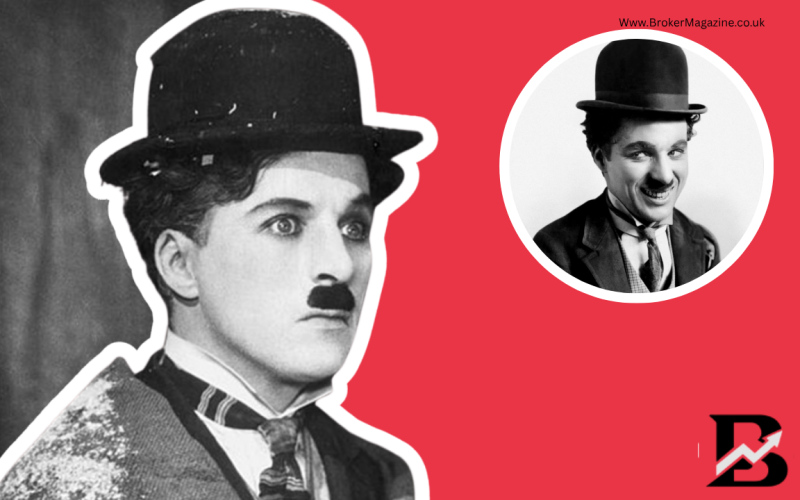
Charlie Chaplin Net Worth | How Rich Was the Silent Film Legend?
Charlie Chaplin’s net worth at the time of his death in 1977 is commonly estimated at around $50 million to $100 million, although a definitive, independently verified estate valuation is difficult to establish. Some celebrity wealth publications place his fortune at $100 million or more, while others give lower estimates. These figures should be treated as historical estimates rather than confirmed financial records.
Chaplin’s wealth was extraordinary for an entertainer of his generation. He transformed his success as a silent-film comedian into a business empire by negotiating record-breaking contracts, producing and directing his own films, and co-founding United Artists in 1919. His creative control and ownership interests also helped preserve the commercial value of his work long after his final performances.
Chaplin died on December 25, 1977, at the age of 88, at his home in Switzerland. His financial legacy continued through his family and the companies responsible for managing rights to his films. Understanding his fortune means looking beyond his acting salaries to the ownership, royalties, and lasting value of his creative work.
Charlie Chaplin Net Worth at Death
The most frequently repeated estimates place Chaplin’s wealth at between $50 million and $100 million when he died. The upper figure is widely circulated, but the available public sources do not establish it as a definitive audited valuation of his entire estate.
Estimated wealth at death in 1977
$50 million–$100 million
Approximate modern purchasing-power equivalent
$250 million–$500 million
Illustrative inflation-adjusted range, not a current estate valuation. The exact equivalent depends on the inflation period and calculation method.
The range reflects estimates published by celebrity wealth sources and contemporary reporting, not a single agreed figure. A 1978 newspaper report, for example, said Chaplin’s estate had been estimated at as much as $100 million and reported that royalties continued to generate substantial income. Other retrospective estimates have put his fortune closer to $50 million.
What was Charlie Chaplin’s net worth in today’s money?
If Chaplin’s estate was worth $50 million to $100 million in 1977, a broad estimate of its equivalent purchasing power today would be approximately $250 million to $500 million. This comparison illustrates how substantial the original sums were, but it does not mean the estate is worth that amount today.
Inflation calculations measure changes in the purchasing power of money. They do not account for investment returns, subsequent film licensing income, property appreciation, taxes, family distributions, or changes in the value of intellectual property. The US Bureau of Labor Statistics explains the methodology behind its Consumer Price Index inflation calculator.
It is also essential to distinguish three separate figures:
- Personal net worth at death: The estimated value of Chaplin’s assets minus his liabilities in 1977.
- Inflation-adjusted net worth: The approximate modern purchasing power of that historical amount.
- The value of his legacy today: The value of surviving film rights, licensing arrangements, royalties, and other assets under current ownership.
These figures are related, but they are not interchangeable. Without a reliable, comprehensive current valuation of all relevant assets, it would be misleading to present one modern dollar figure as the definitive value of Chaplin’s estate.
How Charlie Chaplin Built His Fortune
Chaplin’s financial success began with his extraordinary popularity on screen, but his business decisions helped turn fame into lasting wealth. Unlike performers who depended almost entirely on studio salaries, he increasingly controlled the creative and commercial process behind his films.
1. He rose from modest beginnings to international fame
Charles Spencer Chaplin was born in London on April 16, 1889. His parents worked in the entertainment business, but his childhood was marked by poverty and instability. He began performing on stage as a child before entering the American film industry in 1914.
His character known as the Little Tramp became one of cinema’s most recognizable figures. The combination of physical comedy, emotional storytelling, and social observation made Chaplin popular with audiences around the world.
The character was commercially valuable because Chaplin was more than a hired performer. He developed a distinctive screen persona that audiences associated with his name, giving him considerable leverage when negotiating with film companies.
2. His salaries increased dramatically
Chaplin’s early contracts show how quickly his earning power grew as silent cinema expanded.
| Career milestone | Reported earnings | Why it mattered |
|---|---|---|
| Keystone Film Company, 1914 | $150 per week | His first major American film contract |
| Mutual Film Corporation, 1916 | About $10,000 per week, with a $150,000 signing bonus | Made him one of the era’s highest-paid film performers |
| First National, 1917–1918 | $1 million for eight films | Gave him substantial resources and greater production independence |
| United Artists, founded in 1919 | Ownership stake rather than salary alone | Helped him participate in the business of film distribution |
The figures are nominal historical dollars, not modern equivalents. They also describe different types of compensation: a weekly salary, a signing bonus, a multi-film contract, and an ownership interest are not directly comparable.
His $1 million First National deal was particularly significant. It demonstrated that a major film company was willing to commit an enormous sum to secure his work. The contract also helped him establish his own studio facilities in Hollywood.
3. He co-founded United Artists
One of Chaplin’s most consequential business decisions came in 1919, when he joined Mary Pickford, Douglas Fairbanks, and D. W. Griffith to establish United Artists.
The founders wanted greater control over the production and distribution of their films instead of leaving the entire process in the hands of established studio companies. Their arrangement gave the filmmakers a stronger position in deciding what they produced and how their work reached audiences.
United Artists was important to Chaplin’s wealth for several reasons:
- Greater creative control: He could make films according to his own artistic priorities.
- Business participation: He held an ownership interest in the company rather than relying exclusively on a performer’s fee.
- Production independence: He could develop projects outside the conventional studio system.
- Long-term commercial opportunities: Successful films could continue earning money through later distribution and exhibition.
There is an important distinction here: co-founding United Artists did not mean Chaplin personally owned every film distributed by the company. His earnings and rights depended on individual production and distribution arrangements. The value of his fortune came from the combination of his business interests and his own film catalogue, not from one company alone.
4. He controlled much of his filmmaking process
Chaplin’s independence extended well beyond acting. He wrote, directed, produced, and often composed music for his films. He was involved in the development of his projects from their earliest stages through their finished presentation.
His best-known works include The Kid (1921), The Gold Rush (1925), City Lights (1931), Modern Times (1936), and The Great Dictator (1940). These films helped establish his reputation as a filmmaker whose work could endure beyond its original theatrical release.
Creative control had a financial benefit: it gave Chaplin more influence over production costs, storytelling, performance, and the use of his work. It also meant that his commercial legacy was tied to a body of films that remained culturally relevant for decades.
His approach was unusually comprehensive for a performer of his time. Rather than treating acting as the sole source of income, he combined performance, production, direction, music, and business ownership.
Where Did Charlie Chaplin’s Money Come From?
Chaplin’s wealth can be understood through several connected sources of income. His acting contracts made him rich early in his career, while production independence, film ownership, and continuing commercial rights helped sustain his financial legacy.
Film salaries and bonuses
Chaplin’s early contracts brought him unusually high earnings for a film performer. His reported $1 million First National agreement for eight films marked a major milestone in the commercial value of his work.
Production and distribution interests
Through United Artists and his own production activities, Chaplin participated in a business model that gave filmmakers greater control over production and distribution. His financial opportunities extended beyond receiving a fee for appearing in a movie.
Film rights and royalties
Chaplin’s films continued to have commercial value through later screenings, releases, and licensing. The Chaplin Office identifies Roy Export SAS as the rights holder for copyrights and other relevant rights to Chaplin films made from 1918 onward, with a stated exception for A Countess from Hong Kong.
Property, investments, and other assets
Chaplin lived with his family at Manoir de Ban in Switzerland during his later years. His overall fortune would have depended on the value of his property and financial assets as well as income from entertainment. The precise contribution of each category cannot be established from the commonly published net-worth estimates.
Did Charlie Chaplin own the rights to all his movies?
No single statement about ownership covers every film Chaplin made. The rights depended on the film and the relevant production, distribution, and copyright arrangements.
According to the Chaplin Office, Roy Export SAS holds copyrights and other relevant rights to films made from 1918 onward, apart from A Countess from Hong Kong. A separate company, Bubbles Incorporated SA, manages commercial rights associated with Chaplin’s name, image, likeness, and Little Tramp character. The family-founded Association Chaplin works to protect the name, image, and moral rights connected with his work.
This distinction matters when assessing his legacy. Ownership of a film copyright, the right to distribute a film, and permission to use a famous character commercially are different assets. They can generate different forms of income and may be administered by different entities.
Chaplin’s lasting financial influence therefore came not simply from being a successful actor, but from creating valuable work and establishing a system through which important rights could continue to be managed.
Charlie Chaplin’s Career and Wealth Timeline
The following timeline highlights the milestones that help explain how Chaplin built his fortune.
| Year | Career or financial milestone | Significance |
|---|---|---|
| 1889 | Born in London, England | Began life in a family of music-hall performers |
| 1914 | Entered American filmmaking with Keystone | His screen career began expanding internationally |
| 1916 | Signed with Mutual Film Corporation | His salary rose dramatically |
| 1917–1918 | Secured a reported $1 million First National deal | Strengthened his financial independence |
| 1919 | Co-founded United Artists | Gained a stake in a filmmaker-led business |
| 1921–1940 | Released enduring films, including The Kid, City Lights, and The Great Dictator | Built a catalogue with long-term cultural and commercial value |
| 1952 | Left the United States for Europe | Entered a new phase of life and work |
| 1972 | Returned to the United States to receive an honorary Academy Award | Received major recognition from the film industry |
| 1977 | Died in Switzerland at age 88 | His financial and creative legacy passed into estate and rights management |
How much did Charlie Chaplin earn at his peak?
Chaplin’s Mutual contract in 1916 reportedly paid him $10,000 per week, together with a $150,000 signing bonus. His First National contract was valued at $1 million for eight films. These agreements demonstrate that his earnings had reached exceptional levels while he was still a relatively young performer.
There is no single, well-established figure for Chaplin’s peak annual income across all revenue sources. A salary figure does not necessarily include production profits, distribution receipts, ownership interests, or other investments.
For that reason, his early contract values are more useful as documented career milestones than as a complete measure of his lifetime earnings.
Charlie Chaplin’s Estate After His Death
Chaplin died at Manoir de Ban in Corsier-sur-Vevey, Switzerland, on December 25, 1977. He was survived by his wife, Oona O’Neill Chaplin, and children from his relationships and marriages. His death ended his personal career, but it did not end the commercial life of his films.
Who inherited Charlie Chaplin’s fortune?
Oona O’Neill Chaplin was his widow and a central figure in the family’s life after his death. Contemporary reporting and later biographical accounts commonly describe her as the recipient of a substantial fortune. Some sources state that she inherited more than $100 million, although the exact valuation and the scope of the assets included in that figure are not established by a publicly available, comprehensive estate accounting.
Chaplin and Oona had eight children together. His family also included children from earlier relationships. The existence of these family relationships should not be confused with proof of a specific inheritance percentage for each child.
Without verified details of the will, relevant estate arrangements, and subsequent distributions, it would be inaccurate to state that every child received an equal share or to assign precise dollar amounts to individual heirs.
Oona remained at the family’s Swiss home until her death in 1991. The ongoing management of Chaplin’s creative legacy subsequently involved family members and rights-holding companies.
How the Chaplin legacy continued to earn money
A film catalogue can remain commercially valuable for decades after its creator dies. Chaplin’s work has continued to be distributed, screened, studied, and licensed. His image and Little Tramp character also have a separate commercial legacy.
The current Chaplin Office identifies distinct organizations responsible for film rights, commercial uses of Chaplin’s identity, and protection of his creative legacy. This provides a clearer picture of how the work is administered than treating all posthumous earnings as a single bank account belonging to one heir.
The key distinction is between inheritance and continuing business revenue. An heir may inherit assets or interests, while specialist companies administer particular rights and licensing arrangements. Income generated after Chaplin’s death does not automatically mean that his personal estate remains unchanged in value or that one individual receives all revenue.
The shocking theft of Charlie Chaplin’s body
One of the strangest episodes in Chaplin’s posthumous history occurred in 1978, only a few months after his death.
On March 1, 1978, thieves stole his coffin from the cemetery at Corsier-sur-Vevey. The perpetrators later demanded a ransom from the family. According to The Washington Post’s contemporary report, the initial demand was $600,000 before it was reduced to $250,000. Oona refused to pay the ransom, while the family cooperated with the police investigation.
Swiss police eventually arrested two men and recovered Chaplin’s coffin from a shallow grave in a cornfield near Noville in May 1978. The incident brought an end to an extraordinary criminal case that had attracted international attention.
The episode is part of Chaplin’s legacy, but it should not overshadow the much more consequential story of his career and the family’s stewardship of his work. The theft did not establish anything about the size of his estate; it was a criminal attempt to extort money from his widow.
Why Charlie Chaplin’s Wealth Is Difficult to Calculate
The uncertainty around Chaplin’s net worth is not unusual for a historical figure who accumulated assets over a long career and whose estate involved multiple kinds of property and rights.
Several issues complicate the calculation.
First, published estimates are not consistent. Some sources report $50 million, while others cite $100 million or more. The estimates are not accompanied by a single publicly available financial statement that reconciles the difference.
Second, historical net worth is not the same as lifetime earnings. Chaplin earned large sums from contracts, but gross earnings do not account for production expenses, taxes, personal spending, legal costs, investments, or other liabilities.
Third, intellectual property can change in value over time. A film catalogue may earn money through licensing, theatrical releases, restorations, and other distribution channels. Its value depends on rights, agreements, costs, and expected future income.
Fourth, inheritance does not freeze an estate’s value. Assets may be transferred, sold, reinvested, or distributed among family members. The current value of rights associated with Chaplin’s work cannot simply be substituted for the value of his personal estate in 1977.
These limitations explain why a carefully qualified estimate is more informative than an exact-looking number without supporting records.
Frequently Asked Questions About Charlie Chaplin’s Net Worth
1. What was Charlie Chaplin’s net worth when he died?
Charlie Chaplin’s net worth at death is commonly estimated at $50 million to $100 million in 1977 dollars. The exact figure remains uncertain because these estimates are not supported by one publicly available, comprehensive estate valuation.
2. How much would Charlie Chaplin’s fortune be worth today?
A fortune of $50 million to $100 million in 1977 would have purchasing power broadly comparable to $250 million to $500 million today, depending on the inflation period used. This is an illustrative comparison, not an estimate of the current value of his family’s assets or film rights.
3. What was Charlie Chaplin’s highest salary?
Chaplin’s Mutual Film Corporation contract in 1916 reportedly paid him $10,000 per week, plus a $150,000 signing bonus. His subsequent First National agreement was worth $1 million for eight films. These are major documented milestones in his rise to financial prominence.
4. Did Charlie Chaplin own United Artists?
Chaplin co-founded United Artists in 1919 with Mary Pickford, Douglas Fairbanks, and D. W. Griffith. He held an ownership interest alongside the other founders. The company was established to give filmmakers more control over the production and distribution of their work; it was not simply a studio owned by Chaplin alone.
5. Who inherited Charlie Chaplin’s money?
His wife, Oona O’Neill Chaplin, was the principal family figure associated with his estate after his death. Reports describe her as inheriting a substantial fortune, but reliable public evidence does not establish a complete breakdown of the assets and exact amounts received by each beneficiary. Chaplin had eight children with Oona, as well as children from earlier relationships.
6. What happened to Charlie Chaplin’s body after his death?
In March 1978, thieves stole Chaplin’s coffin from his grave in Switzerland and demanded a ransom from his family. Police recovered the coffin from a cornfield in May 1978 after arresting two men. His widow refused to pay the ransom.
7. Does Charlie Chaplin’s estate still earn money?
Chaplin’s films and image continue to have commercial and cultural value. The Chaplin Office identifies Roy Export SAS as a rights holder for many of his films and Bubbles Incorporated SA as responsible for commercial rights associated with his name and Little Tramp character. This confirms ongoing rights management, but it does not establish a definitive current estate valuation.
8. What were Charlie Chaplin’s main sources of wealth?
His principal sources of wealth included film salaries, signing bonuses, production and distribution interests, and income associated with his films and intellectual property. His ability to combine acting with writing, directing, producing, and business ownership distinguished his financial career from that of performers who relied primarily on studio salaries.
Conclusion: Charlie Chaplin’s Financial Legacy
Charlie Chaplin’s fortune reflected more than his popularity as the Little Tramp. His early contracts made him one of the highest-paid performers of his generation, while his work as a filmmaker and his involvement in United Artists helped him gain greater control over his career.
Although estimates of Charlie Chaplin’s net worth at death range from approximately $50 million to $100 million, the exact figure remains uncertain. The more enduring part of his financial story is the value of his creative catalogue and the rights-management structures that have preserved his work for future audiences.
For readers interested in film history, Chaplin’s career offers a useful lesson in the relationship between creative independence and financial success: earning money from a performance can be lucrative, but creating and retaining valuable intellectual property can extend a creator’s legacy far beyond a lifetime.
Explore more biographies and historical wealth profiles on Broker Magazine to learn how influential figures built their fortunes and what happened to their legacies.