

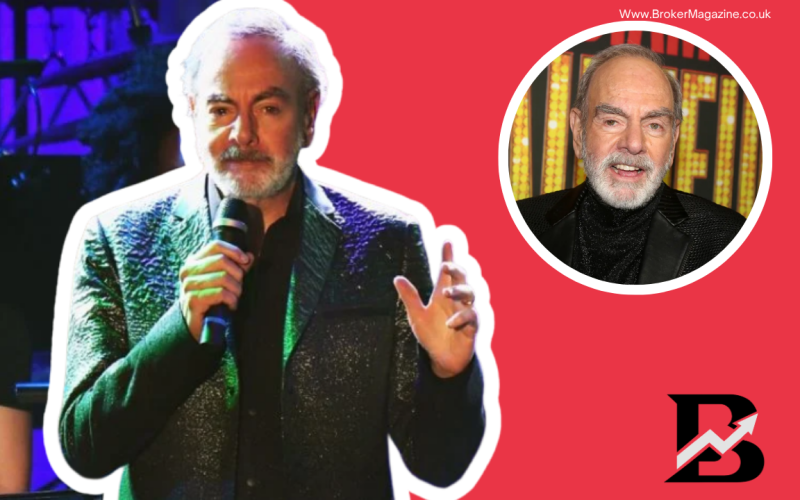
Neil Diamond Net Worth | How Much Is the Singer Worth in 2026?
Neil Diamond’s net worth is commonly estimated at approximately $300 million to $350 million in 2026, although no audited personal balance sheet has been made public. A reasonable midpoint for a reader-facing estimate is about $325 million.
The figure is supported by the scale of Diamond’s six-decade recording career, his enormous touring history, songwriting success, and the 2022 sale of his complete song catalog and master recordings to Universal Music Group. Current public estimates vary because net worth is not the same as career revenue: taxes, management expenses, production costs, investments, property, liabilities and the terms of music-rights transactions all affect how much wealth an artist actually retains.
Diamond’s financial story is unusual even among legendary recording artists. He sold more than 130 million albums worldwide, generated hundreds of millions of dollars in reported concert grosses, wrote songs that became major hits for himself and other performers, and eventually transferred his catalog and recordings to UMG in a deal whose financial terms were not disclosed.
Neil Diamond Net Worth at a Glance
| Detail | Information |
|---|---|
| Estimated net worth in 2026 | $300 million–$350 million |
| Reasonable midpoint estimate | About $325 million |
| Born | January 24, 1941 |
| Birthplace | Brooklyn, New York |
| Profession | Singer, songwriter, composer |
| Career span | More than six decades |
| Worldwide album sales | More than 130 million |
| Major songs | “Sweet Caroline,” “America,” “Cracklin’ Rosie,” “Song Sung Blue,” “Heartlight” |
| Major catalog transaction | Universal Music Group acquired Diamond’s complete song catalog and career master recordings in 2022 |
| Touring retirement | Announced in 2018 following his Parkinson’s disease diagnosis |
Important: The $300 million–$350 million figure is an estimate, not a publicly audited net-worth statement. One current tracking estimate reviewed in September 2026 places Diamond at $350 million, while another widely cited public estimate places him at $300 million.
How Neil Diamond Built His Wealth
Diamond’s fortune did not come from one unusually lucrative song or a single business venture. It developed through several connected parts of the music business over many decades.
1. Record sales and a six-decade catalog
Recorded music was one of the foundations of Diamond’s wealth.
The Songwriters Hall of Fame says Diamond has sold more than 130 million albums worldwide, while Universal Music Publishing Group lists more than 128 million albums sold and 37 Top 40 singles in the United States. Differences between published figures are normal because music-industry organizations may use different reporting periods or definitions of sales.
His career included a remarkable run of commercially successful songs and albums. Among the best-known are:
- “Sweet Caroline”
- “Solitary Man”
- “Cherry, Cherry”
- “Cracklin’ Rosie”
- “Song Sung Blue”
- “America”
- “I Am…I Said”
- “You Don’t Bring Me Flowers”
- “Love on the Rocks”
- “Heartlight”
Diamond also generated publishing income from songs that became hits for other performers. He wrote “I’m a Believer,” which became a No. 1 hit for The Monkees, and “Red Red Wine,” which later became a major international hit for UB40.
That distinction matters when assessing his wealth. Diamond was not simply a singer earning money from records bearing his own name. He was also a songwriter whose compositions could generate publishing revenue through recordings by other artists.
2. Touring became a major source of career revenue
Live performances were another enormous part of Diamond’s financial success.
Pollstar reported that Diamond appeared on its Year End Top Tours chart 16 times from 1986 through 2017, with approximately $730 million in reported gross ticket sales and 10.8 million tickets sold across those year-end appearances. In 2017 alone, at age 76, his shows generated about $63.4 million in gross revenue across 56 performances.
Those numbers should not be confused with Diamond’s personal earnings.
A concert’s gross box-office revenue has to cover promoters, venues, musicians, crew, production, transportation, management and other expenses before the artist’s actual income is determined. Taxes and personal spending then affect how much of that income becomes lasting wealth.
Even with those qualifications, the touring record demonstrates why live performance was an important component of Diamond’s long-term financial success.
3. Songwriting created value beyond his own recordings
Diamond’s songwriting career began before he became a major recording star.
His early professional success came from writing songs for other artists, and his compositions subsequently became part of the broader American pop repertoire. The Songwriters Hall of Fame notes that his writing credits include “I’m a Believer,” “Red Red Wine,” “Girl, You’ll Be a Woman Soon,” “Solitary Man” and many other widely recorded songs.
Songwriting can create several forms of economic value, including publishing income when compositions are recorded, performed, broadcast or otherwise licensed.
For Diamond, that value accumulated over decades. His songs were not dependent on one particular era: recordings by other performers, film appearances, sporting events, radio, streaming and continued public performances have helped keep his work culturally visible.
4. The 2022 Universal Music Group catalog deal
One of the most significant financial events in Diamond’s later career came in February 2022.
Universal Music Group announced that it had acquired Diamond’s entire song catalog through Universal Music Publishing Group as well as the rights to recordings from his career. The transaction also included 110 unreleased tracks, an unreleased album and archival long-form video material.
The financial terms were not publicly disclosed. Bloomberg likewise reported that UMG acquired the catalog and recording rights without revealing the purchase price.
This is an important reason to be cautious with articles that simply add a rumored catalog valuation to Diamond’s net worth. A catalog sale can convert future income rights into an upfront financial asset, but the exact amount Diamond received, the tax consequences and how the proceeds were subsequently invested are not publicly established.
In other words, the catalog transaction is documented; its purchase price is not.
Does Neil Diamond Still Own His Music Catalog?
Not in the broad sense described in the 2022 UMG announcement.
Universal Music Group said it acquired Diamond’s complete song catalog and all master recordings. That means the major body of publishing and recorded-music rights covered by the agreement moved to UMG.
This changes how Diamond’s current music income should be understood.
Before the transaction, ownership of valuable compositions and recordings could produce continuing royalties and licensing income. After the transaction, the economic value of those rights was incorporated into the catalog deal.
That does not mean Diamond stopped having any connection to his music. His name, artistic legacy, performances and other potential income streams remain separate questions. It does mean that claims suggesting he personally continues to own his entire historic catalog should be treated cautiously.
The exact contractual division of every possible right is not publicly available.
How Parkinson’s Disease Changed Neil Diamond’s Earnings
Diamond announced his retirement from concert touring in January 2018 after being diagnosed with Parkinson’s disease.
His official statement said the condition made large-scale travel and performance difficult, and that doctors had advised him to cancel the Australian and New Zealand portion of his 50th Anniversary tour. At the same time, Diamond said he intended to continue writing, recording and developing new projects.
The financial consequence was significant because touring had been one of his most productive revenue sources.
Pollstar’s data shows just how substantial the live business remained shortly before his retirement: Diamond grossed $63.4 million from 56 shows in 2017.
Retiring from touring therefore removed a major source of active income. But Diamond’s wealth did not depend exclusively on concerts.
His extensive recording history, songwriting legacy and catalog transaction provided other sources of economic value. This is one reason a veteran artist can retain substantial wealth even after stopping regular touring.
It is also important not to speculate about Diamond’s current medical condition beyond what he and reliable public sources have disclosed. His 2018 announcement established the reason for his touring retirement; detailed private medical information is not necessary to understand his finances.
Why Neil Diamond Can Still Earn Money Without Touring
Retirement from touring does not necessarily mean retirement from the music business.
For a songwriter and recording artist with Diamond’s history, legacy income can come from areas such as:
- Licensing of recordings and compositions
- Streaming and digital consumption
- Radio and public performance
- Film and television uses
- Commercial licensing
- Cover versions of his songs
- Reissues and archival releases
- Previously recorded music
- New projects that use or build on his catalog
The important qualification is that not every dollar generated by Diamond’s music necessarily goes directly to Diamond today.
Because UMG acquired his catalog and master recordings, the economics of those rights changed in 2022. The company now controls the assets covered by the agreement, while Diamond’s personal financial benefit from the transaction depends on the undisclosed deal terms and what he did with the proceeds.
That distinction prevents a common mistake: treating every dollar generated by a Diamond song today as personal income for Diamond.
Neil Diamond’s Career in Brief
Neil Leslie Diamond was born in Brooklyn, New York, on January 24, 1941. He began writing songs while young and initially built his reputation as a songwriter before establishing himself as a major recording artist.
His breakthrough period came in the 1960s, when songs such as “Solitary Man” and “Cherry, Cherry” established his distinctive songwriting and performing style.
He wrote “I’m a Believer” for The Monkees in 1966, giving him an important songwriting credit even before his own recording career reached its greatest commercial heights.
The late 1960s and early 1970s transformed Diamond into a major solo star. “Sweet Caroline” became one of his signature recordings, followed by major successes including “Cracklin’ Rosie” and “Song Sung Blue.”
“Cracklin’ Rosie” became Diamond’s first U.S. No. 1 single, while “Sweet Caroline” reached No. 4 on the Billboard Hot 100.
He later expanded his work into film and soundtrack projects, including Jonathan Livingston Seagull and the 1980 film The Jazz Singer, which produced songs including “Love on the Rocks” and “America.”
His career longevity is reflected in his honors. Diamond is a member of both the Rock & Roll Hall of Fame and Songwriters Hall of Fame and received a Grammy Lifetime Achievement Award in 2018.
What Is the Biggest Contributor to Neil Diamond’s Net Worth?
There is no publicly audited breakdown showing exactly what percentage of Diamond’s wealth comes from records, touring, publishing, investments or property.
Still, the available evidence points to several major wealth-building phases.
| Wealth driver | Why it matters |
|---|---|
| Recorded music | More than 130 million albums sold worldwide created decades of recording and licensing value. |
| Songwriting | Diamond wrote successful songs for himself and other artists, expanding his publishing income. |
| Touring | Pollstar recorded $730 million in gross ticket sales across Diamond’s year-end Top Tours appearances from 1986–2017. |
| Catalog transaction | UMG acquired Diamond’s complete song catalog and career master recordings in 2022; the price was not disclosed. |
| Real estate and other assets | Diamond has owned high-value property, but a complete current asset list is not public. |
| Legacy income | His recordings and compositions continue to have cultural and commercial uses even after his touring retirement. |
The strongest conclusion is not that one particular source made Diamond wealthy. It is that decades of music ownership, songwriting, touring and asset monetization created a very large cumulative financial base.
Neil Diamond’s Property and Real Estate
Diamond has owned valuable real estate, although there is no reliable public inventory of every property he currently owns.
One well-documented example is a Malibu estate he purchased in 2016 for a reported $7.25 million. Architectural Digest described the property as a 4,692-square-foot home with five bedrooms, seven bathrooms, an infinity pool and direct beach access.
Real estate should be treated as only one part of a celebrity’s financial picture. The purchase price of a house does not tell us its current market value, remaining mortgage, ownership structure, tax position or whether the property is still owned.
For that reason, it would be misleading to calculate Diamond’s net worth by simply adding historical property purchase prices to published estimates.
How Reliable Is the $300 Million–$350 Million Estimate?
The range is useful as a public estimate, but it should not be presented as an independently verified fact.
Celebrity Net Worth currently lists Diamond at $300 million. A separate tracking source reviewed in September 2026 places its base-case estimate at $350 million, while explicitly acknowledging uncertainty surrounding Diamond’s current rights ownership, private investments, property and liabilities.
That produces a reasonable public range of approximately $300 million to $350 million.
A midpoint of about $325 million is therefore useful for readers who want one number, but it should not be mistaken for a confirmed figure.
Why an exact number is impossible to verify
A celebrity’s net worth is essentially:
Assets − liabilities = net worth
The problem is that most of the inputs are private.
For Diamond, publicly available information does not provide a complete current list of:
- Bank and investment accounts
- Private companies
- Property holdings
- Outstanding debts
- Tax liabilities
- Trust structures
- Family financial arrangements
- The proceeds and after-tax treatment of the UMG transaction
- All remaining music-related rights
That is why responsible net-worth reporting should use a range rather than pretend that an exact number is known.
Neil Diamond’s Financial Legacy
Diamond’s financial legacy is closely tied to the unusual durability of his music.
Few artists can point to a catalog that has remained recognizable across multiple generations while also producing successful records for other performers. “Sweet Caroline” alone has moved far beyond its original release, becoming a familiar communal song at sporting events and public gatherings.
The Rock & Roll Hall of Fame describes Diamond’s songwriting as central to his broad commercial appeal, while the Songwriters Hall of Fame credits him with more than five decades of chart success.
His financial legacy also illustrates an important change in the music industry: established artists can monetize decades of creative work by selling or transferring catalog rights rather than relying solely on new releases and live concerts.
Diamond’s 2022 agreement with UMG is a clear example. Instead of depending on decades of future publishing and recording income, the transaction placed his body of work under a major music company while providing Diamond with the economic value negotiated in the deal. The exact amount remains private.
Frequently Asked Questions
What is Neil Diamond’s net worth in 2026?
Neil Diamond’s net worth is publicly estimated at approximately $300 million to $350 million in 2026. A midpoint of around $325 million is a useful shorthand, but no audited personal net-worth statement has been published.
How did Neil Diamond make his money?
His wealth was built through a combination of record sales, songwriting, music publishing, touring, recording rights and other assets. His catalog has generated value through both his own recordings and songs he wrote for other artists.
How many records has Neil Diamond sold?
The Songwriters Hall of Fame reports that Diamond has sold more than 130 million albums worldwide. Universal Music Publishing Group reports a comparable figure of more than 128 million albums.
Did Neil Diamond sell his music catalog?
Yes. In 2022, Universal Music Group announced that it had acquired Diamond’s complete song catalog and rights to recordings from his career. The deal also covered 110 unreleased tracks, an unreleased album and archival video material. The purchase price was not disclosed.
Does Neil Diamond still tour?
Diamond announced his retirement from concert touring in January 2018 after being diagnosed with Parkinson’s disease. He canceled the remaining international portion of his 50th Anniversary tour.
What are Neil Diamond’s biggest songs?
Among his best-known songs are “Sweet Caroline,” “Cracklin’ Rosie,” “Song Sung Blue,” “America,” “Solitary Man,” “Cherry, Cherry,” “I Am…I Said,” “Love on the Rocks” and “Heartlight.”
How much did Neil Diamond make from touring?
There is no reliable public figure for Diamond’s personal take-home touring income. Pollstar reported approximately $730 million in gross ticket sales across his appearances on the Year End Top Tours chart from 1986 through 2017, with 10.8 million tickets sold. Gross box-office revenue is not the same as an artist’s personal earnings.
What happened to Neil Diamond’s catalog after he retired from touring?
His touring retirement did not end the commercial value of his music. In 2022, UMG acquired his complete song catalog and career master recordings. His music therefore remains commercially active through the rights held by the company, even though Diamond no longer regularly tours.
Does Neil Diamond own a house in Malibu?
Diamond has owned Malibu real estate. A 2017 report documented his purchase of a Malibu estate for approximately $7.25 million. Whether that property remains part of his current holdings cannot be established from that historical purchase report alone.
Conclusion: Neil Diamond’s Net Worth Reflects a Six-Decade Music Legacy
The most defensible public estimate places Neil Diamond’s net worth in the $300 million–$350 million range in 2026, with approximately $325 million serving as a reasonable midpoint rather than a verified balance-sheet figure.
The scale of that wealth makes more sense when viewed through the full arc of his career. Diamond sold more than 130 million albums, wrote enduring songs for himself and other performers, generated hundreds of millions of dollars in reported touring grosses, and ultimately sold his complete song catalog and career master recordings to Universal Music Group.
His 2018 retirement from touring ended one of the most lucrative and durable live careers of his generation, but it did not erase the financial value created by decades of recorded music and songwriting.
The most important qualification is that career revenue, catalog value and personal net worth are three different things. Without access to Diamond’s private financial records and the undisclosed terms of his UMG transaction, the $300 million–$350 million range should remain an informed estimate—not a claim of exact personal wealth.
For readers researching Neil Diamond’s financial legacy, the clearest picture comes from looking beyond a single headline number and considering the music, touring history, catalog transaction and publicly documented assets together.