

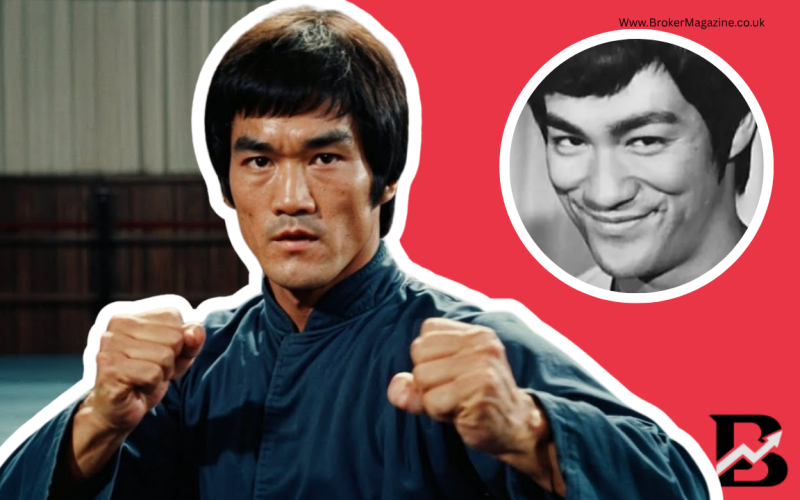
Bruce Lee Net Worth | What He Was Worth in 1973 and What His Estate Is Worth Today
Bruce Lee’s wealth is often presented online as a single modern net-worth figure, but that can be misleading. Celebrity Net Worth currently estimates that Bruce Lee was worth about $1.5 million when he died in 1973, equivalent to roughly $10 million in today’s dollars after inflation. That figure describes Lee’s personal wealth near the end of his life—not the value of the intellectual property, licensing business, film rights, and commercial opportunities associated with his name decades later.
The distinction matters because Lee died at only 32, just as his earning power was accelerating. His early Golden Harvest movies had turned him into a major Asian star, Enter the Dragon was about to transform him into a global icon, and his name, image, and likeness would eventually become valuable commercial assets.
So, if the question is “What was Bruce Lee’s net worth when he died?”, approximately $1.5 million in 1973 is a reasonable third-party estimate. If the question is “How valuable is the Bruce Lee brand and estate today?”, there is no comparably authoritative single figure. Modern estimates vary widely, and many websites confuse annual licensing revenue, intellectual-property value, and personal net worth.
Bruce Lee Net Worth at the Time of His Death
Bruce Lee died on July 20, 1973, in Hong Kong. He had built an unusually successful career in a very short period, but he was not yet the enormous commercial brand that he would become after his death.
Celebrity Net Worth places his fortune at approximately $1.5 million at the time of death, while describing that amount as roughly $10 million in current purchasing power.
That estimate should be treated as an approximation rather than a definitive probate balance sheet. Lee’s financial affairs were complicated by film-production interests, business arrangements, insurance, property, taxes, and rights connected to his name and image.
A federal court record concerning Bruce Lee Enterprises confirms that Lee died intestate, meaning without a will, and that his assets were probated in California and Hong Kong. The court record also says that the estate’s tangible assets included shares in Concord Productions, the Hong Kong-based production company Lee had established with Raymond Chow.
This helps explain why simply searching for a modern “Bruce Lee net worth” number can produce confusing results. The fortune Lee personally controlled in 1973 and the commercial value generated by his identity after 1973 are two different measurements.
Bruce Lee’s wealth in perspective
| Period | Financial picture |
|---|---|
| 1966–1967 | Relatively modest television income from The Green Hornet |
| 1971 | Major career breakthrough with The Big Boss |
| 1972 | Rapid rise through Fist of Fury and Way of the Dragon |
| 1973 | Estimated personal net worth around $1.5 million |
| After 1973 | Film, licensing, merchandising and publicity rights continued generating value |
| Modern era | Bruce Lee Enterprises manages substantial commercial rights connected with his identity |
The important point is that $1.5 million was a substantial fortune in 1973, but it was nowhere near the level of wealth later associated with Bruce Lee’s global brand.
How Bruce Lee Made His Money
Lee’s income came from several sources rather than from acting alone.
He worked as an actor, martial arts instructor, writer, choreographer, producer and director. His career also involved commercial interests surrounding his martial arts schools and his growing public profile.
His Hollywood television work initially provided recognition rather than enormous wealth. His financial breakthrough came when he returned to Hong Kong and began working with Golden Harvest.
The official Bruce Lee biography explains that Raymond Chow approached Lee about making films for Golden Harvest after Lee’s American television career had stalled. The Big Boss became a major success, followed by Fist of Fury and Way of the Dragon.
The scale of Lee’s financial rise can be seen by comparing his television salaries with his later film contracts.
Bruce Lee’s Television Earnings
The Green Hornet
Bruce Lee became widely known to American television audiences as Kato in The Green Hornet.
His initial compensation was modest by the standards of a leading television performer. Historical research into the production records indicates that Lee was hired at $400 per episode, with his compensation later rising to $550 per episode. A surviving Green Hornet contract sold by Heritage Auctions also documents a graduated compensation structure beginning at $400 per week and reaching $1,000 under a longer option.
The financial imbalance was significant. Van Williams, who played the Green Hornet, was reportedly earning $2,000 per half-hour episode, while Lee’s initial rate was only $400.
That disparity is important when considering Bruce Lee’s later fortune. The man who would eventually become one of the most recognizable martial arts stars in the world started his American television career on relatively modest pay.
Longstreet
Lee also appeared on the television series Longstreet in 1971, playing martial arts instructor Li Tsung.
According to the salary information compiled by IMDb, Lee earned $2,000 per episode for Longstreet, a considerable improvement over his original Green Hornet compensation.
The role also demonstrated how Lee’s martial arts expertise was becoming part of his professional identity. He was not simply being hired as an actor; his knowledge of martial arts was increasingly central to his screen persona.
Bruce Lee’s Film Salaries
Lee’s movie career moved much faster financially than his early television career.
The Big Boss
For The Big Boss, Lee reportedly received $7,500.
The Independent reported that Lee signed with Golden Harvest for The Big Boss and Fist of Fury for a flat fee of $7,500 per film.
That was a meaningful amount for Lee at the time, especially because he had been struggling financially after the cancellation of The Green Hornet. But the figure looks small when compared with what the movie itself eventually represented.
The Big Boss became a major box-office success and established Lee as a leading martial arts star in Hong Kong.
Fist of Fury
Lee again earned approximately $7,500 for Fist of Fury, according to the same historical account.
The movie was another enormous success and strengthened Lee’s bargaining position.
The progression is striking:
$400-per-episode television work → $7,500 Hong Kong film contracts → six-figure Hollywood compensation.
That rapid escalation occurred within only a few years.
Way of the Dragon
Lee followed Fist of Fury with Way of the Dragon, a project that gave him substantially more creative control. He wrote, directed and starred in the film.
This is financially significant because Lee’s value was no longer limited to his acting salary. He was becoming a filmmaker and producer who could participate in the creation and commercial direction of his projects.
Enter the Dragon
Enter the Dragon represented the biggest leap in Lee’s career.
The Warner Bros.–Golden Harvest production was made in 1972 and released shortly after Lee’s death in 1973. The film became the movie that cemented his international reputation.
Historical accounts place Lee’s compensation for Enter the Dragon at around $100,000, although the exact financial arrangements surrounding his compensation, bonuses and estate interests were more complicated than a simple salary figure. A detailed account of the estate’s later financial disputes records a Warner Bros. contractual obligation of $100,000 and additional amounts owed to Lee’s estate.
The distinction is crucial: Lee died before Enter the Dragon was released, so he never lived to experience the full commercial consequences of the film’s success.
PBS’s examination of Enter the Dragon also places the film in the context of Warner Bros.’ decision to back Lee after seeing what he could accomplish on relatively modest budgets.
Bruce Lee’s Major Reported Salaries
| Project | Approximate reported compensation | Significance |
|---|---|---|
| The Green Hornet | $400 per episode initially | Breakthrough American television role |
| The Green Hornet | Up to about $550 per episode | Later increase |
| Longstreet | $2,000 per episode | Higher-value television work |
| The Big Boss | $7,500 | Golden Harvest breakthrough |
| Fist of Fury | $7,500 | Major Hong Kong success |
| Enter the Dragon | About $100,000 | International breakthrough |
The figures should not be interpreted as perfectly comparable. Different contracts had different structures, and reported salaries do not necessarily include bonuses, expenses, profit participation or other compensation.
Bruce Lee’s 1969 $10 Million Goal
One of the most fascinating pieces of evidence about Lee’s financial ambitions existed before he became a major movie star.
In January 1969, Bruce Lee wrote a handwritten document titled “My Definite Chief Aim.” In it, he stated that he wanted to become the highest-paid “Oriental super star” in the United States and that he intended to have $10 million by the end of 1980.
The Bruce Lee family’s official website has published the document’s text and identifies Lee as being 28 years old when he wrote the goal.
The document is particularly interesting because Lee did not merely write down a desire for fame. He attached a specific financial target and a deadline to it.
South China Morning Post also reported on the handwritten statement when the document was offered at auction in 2019.
There is an important historical caveat, though: Lee died in 1973, seven years before the deadline he had set for himself. He therefore did not reach the $10 million target during his lifetime.
That makes the document less useful as proof of his eventual wealth than as evidence of how ambitious Lee’s financial and professional plans were.
Did Bruce Lee Reach His $10 Million Goal?
No—not during his lifetime.
Lee’s own document set a goal of possessing $10 million by the end of 1980. He died in July 1973, meaning the goal period ended more than seven years after his death.
What he did accomplish was remarkable: between writing the document in 1969 and his death in 1973, he went from struggling for major acting opportunities to becoming one of the world’s most recognizable martial arts stars.
In other words, his career trajectory dramatically accelerated, but his financial goal outlived him.
It would be inaccurate to say that Bruce Lee personally accumulated $10 million before he died.
Linda Lee Cadwell and Bruce Lee’s Estate
Bruce Lee’s wife, Linda Lee Cadwell, played a central role in the administration and preservation of his legacy.
Lee died without a will, and his postmortem publicity rights were distributed among his heirs. Court records from litigation involving Bruce Lee Enterprises state that 50% went to Linda and 25% each to children Brandon and Shannon.
Brandon Lee died in 1993. According to the same court record, his share subsequently passed to Linda, giving her a 75% interest in the relevant right of publicity.
The family’s handling of these rights eventually evolved into the modern Bruce Lee Enterprises structure.
Today, the official Bruce Lee website states that Bruce Lee Enterprises, LLC is the exclusive owner of commercial merchandising and allied rights associated with Bruce Lee’s name, image, likeness, persona, signature, voice, marks and related intellectual property.
Shannon Lee has played the leading role in developing and managing this commercial legacy. The official Bruce Lee Enterprises history says she regained full control of her father’s name and image and developed the business around licensing, partnerships and legacy projects.
What Is Bruce Lee’s Estate Worth Today?
There is no universally accepted current valuation of Bruce Lee’s estate.
This is where many online net-worth articles become unreliable.
Some websites assign figures running into hundreds of millions of dollars to the Bruce Lee brand. For example, one 2026 tracker currently estimates an estate value of $300 million. But that number is an editorial estimate, not a publicly audited valuation of Bruce Lee’s estate.
It should therefore not be presented as an established fact.
Celebrity Net Worth provides a more conservative and clearly defined figure: $1.5 million at death, or about $10 million in inflation-adjusted current dollars.
Those numbers answer a different question from an estimate of the current commercial value of Lee’s intellectual property.
Why a modern estate valuation is difficult
Several different assets and rights are involved:
- Bruce Lee’s name and likeness
- Trademarks and commercial branding
- Licensing agreements
- Merchandise
- Books and written works
- Film-related rights
- Television and documentary projects
- Video-game appearances
- Advertising and endorsement agreements
- Museum and cultural projects
- Other intellectual-property rights
Not all of these assets belong to the same entity.
A federal court record concerning Bruce Lee Enterprises specifically explains that film rights and publicity rights can be held by different parties. For example, it notes that Fortune Star held rights to several films while Warner Bros. held rights connected with Enter the Dragon, while commercial use of Lee’s likeness required licensing from Bruce Lee Enterprises.
That makes it inappropriate to add up the gross revenues associated with every Bruce Lee movie and call the result his “estate value.”
Bruce Lee’s Posthumous Earnings
Although a definitive lifetime-to-present total is unavailable, there is strong evidence that Lee continued to generate significant commercial income after his death.
Forbes estimated that Bruce Lee generated $7 million in posthumous earnings in 2013.
Forbes’ methodology for its dead-celebrity rankings was based on what an estate generated during a particular period rather than on the total value of all assets. The publication explained that its estimates were assembled through conversations with estate managers, agents, publishers and other industry sources and that they measured earnings over a defined 12-month period.
In 2014, Forbes again highlighted Bruce Lee among deceased celebrities benefiting from commercial exploitation of their images. His posthumous commercial activity that year included an EA Sports UFC appearance and a Mazda advertisement.
These figures demonstrate something important: posthumous earnings are not the same thing as net worth.
An estate can generate millions in a particular year without being worth that amount, just as a company can have substantial annual revenue without that revenue representing its owners’ personal wealth.
How Bruce Lee Still Makes Money
The modern Bruce Lee business is built heavily around licensing and intellectual property.
Bruce Lee Enterprises describes itself as a global licensing business and says it works with partners to develop products and content connected with Lee’s values and identity.
That can include commercial products, apparel, entertainment, media projects and other licensed uses.
The commercial value of Lee’s identity is unusually durable because his public image is strongly connected to several enduring cultural ideas:
martial arts, discipline, physical fitness, philosophy, self-expression and cinematic innovation.
Unlike an actor whose earning potential depends primarily on new performances, Bruce Lee’s identity can continue generating licensing opportunities without requiring him to create new work.
Why Bruce Lee’s Brand Outlived His Career
Bruce Lee’s filmography was remarkably small compared with many major Hollywood stars.
Yet his influence became much larger than the number of films he completed.
His breakthrough movies changed the commercial perception of martial arts cinema, while Enter the Dragon introduced his screen persona to a worldwide audience.
His death also froze his image at the height of his physical abilities and charisma. He never experienced a long decline in popularity, and there was no late-career period in which audiences watched his relevance fade.
That helped turn Bruce Lee from a successful actor into a cultural icon.
The modern estate benefits from this unusual combination of factors: a recognizable image, a distinctive philosophy, a limited body of work, strong international recognition and decades of commercial demand.
Bruce Lee’s Estate vs. Bruce Lee’s Net Worth
These terms should not be used interchangeably.
Bruce Lee’s personal net worth
This refers to the approximate value of what Lee owned and controlled around the time of his death in 1973.
A commonly cited estimate is $1.5 million.
Posthumous earnings
These are revenues generated after Lee’s death from licensing, advertising, entertainment and other commercial uses.
Forbes, for example, estimated $7 million in one 2013 measurement period.
Estate or brand valuation
This is an estimate of what the relevant intellectual-property assets and commercial rights might be worth as a whole.
There is no publicly established figure that can confidently be called “Bruce Lee’s current net worth.”
That is why claims of $100 million, $300 million or other large figures should be treated as estimates unless supported by detailed financial records.
The Financial Legacy of Enter the Dragon
Enter the Dragon deserves special attention because it illustrates the gap between Lee’s personal earnings and his long-term commercial impact.
Lee reportedly earned around $100,000 under his Warner Bros. arrangement, a dramatic increase over his earlier Golden Harvest salaries.
But the movie’s importance went far beyond that paycheck.
Lee died before the film was released, meaning he did not participate in the decades of cultural and commercial activity that followed its international success.
The film became one of the defining martial arts movies of the 20th century and helped establish Lee as a worldwide symbol of martial arts cinema.
That is why looking only at his $100,000 compensation misses the larger financial story. Lee’s biggest economic asset ultimately became his name rather than any single acting paycheck.
Was Bruce Lee Rich When He Died?
Yes, by ordinary standards—but his wealth should be understood in historical context.
An estimated $1.5 million in 1973 represented substantial wealth. At the same time, Lee’s financial situation was not comparable to the hundreds-of-millions figures sometimes attached to his modern brand.
He had only recently reached the highest level of his earning power.
His early American television salary was modest. His first major Golden Harvest contracts were worth thousands rather than millions. Then his international career accelerated dramatically, culminating in Enter the Dragon.
Had Lee lived through the 1970s and 1980s, his income trajectory could have been dramatically different. But that is a hypothetical and should not be incorporated into his actual net worth.
Frequently Asked Questions About Bruce Lee Net Worth
What was Bruce Lee’s net worth when he died?
Celebrity Net Worth estimates that Bruce Lee had approximately $1.5 million at the time of his death in 1973, equivalent to roughly $10 million after inflation.
How much did Bruce Lee make from The Big Boss?
Historical accounts generally put his compensation for The Big Boss at approximately $7,500. He received a similar amount for Fist of Fury.
How much did Bruce Lee make from Enter the Dragon?
His compensation is commonly reported at approximately $100,000, although the estate’s later financial records show that the contractual arrangements involved additional amounts and obligations.
How much did Bruce Lee make on The Green Hornet?
Lee initially earned approximately $400 per episode as Kato. His compensation later increased, with historical contract records showing higher rates under subsequent options.
Did Bruce Lee have $10 million?
Not during his lifetime. In January 1969, he wrote a personal goal stating that he intended to have $10 million by the end of 1980. He died in 1973 before reaching that deadline.
Who inherited Bruce Lee’s estate?
Bruce Lee died without a will. Court records indicate that his postmortem publicity rights were divided with 50% going to Linda Lee Cadwell and 25% each to Brandon Lee and Shannon Lee.
Who manages Bruce Lee’s legacy today?
Bruce Lee Enterprises, led by his daughter Shannon Lee, manages substantial commercial rights associated with Bruce Lee’s name, image and likeness. The company’s official website describes Bruce Lee Enterprises as the exclusive owner of commercial merchandising and allied rights relating to his identity.
Is Bruce Lee’s estate worth $300 million?
A 2026 online tracker estimates a $300 million estate value, but this is an editorial estimate rather than a publicly audited valuation. It should not be treated as an established fact.
Why are Bruce Lee’s modern net-worth estimates so different?
Because “net worth,” annual posthumous earnings, intellectual-property value and gross commercial revenue are different measurements. There is no public financial statement establishing a single modern net-worth figure for everything associated with Bruce Lee.
Conclusion: Bruce Lee’s Real Financial Legacy
The most defensible answer to Bruce Lee net worth depends on which point in time is being measured.
At his death in 1973, a widely cited estimate puts Bruce Lee’s personal fortune at about $1.5 million, or roughly $10 million in today’s dollars.
His earnings had risen dramatically during the final years of his career. He went from the relatively modest $400-per-episode salary associated with The Green Hornet to $7,500 Golden Harvest film contracts and eventually approximately $100,000 for Enter the Dragon.
But his most valuable financial legacy emerged after his death.
Licensing, publicity rights, merchandising, advertising, entertainment projects and the continued popularity of Enter the Dragon and his other films transformed Bruce Lee’s name into a long-running commercial property. Forbes’ historical posthumous-earnings estimates demonstrate that the brand continued generating millions of dollars decades after his death.
The safest conclusion, therefore, is not that Bruce Lee had a specific modern $300 million “net worth.” It is that he left a comparatively modest personal fortune in 1973 while creating an intellectual-property legacy whose commercial value continued to grow for decades afterward.
That distinction makes his financial story more remarkable—not less. Bruce Lee did not live long enough to collect the fortune his rising career appeared capable of producing. Instead, the worldwide value of the image, philosophy and martial arts legacy he left behind became the enduring asset.
Author Biography
| Author | Biography |
|---|---|
[Author Name] | [Accurate biography based only on supplied information] |
Image Suggestions
Image Idea: A high-quality archival portrait of Bruce Lee from his early Hollywood period.
Suggested Alt Text: Bruce Lee during his early Hollywood career.
Image Idea: Bruce Lee as Kato in The Green Hornet.
Suggested Alt Text: Bruce Lee as Kato in The Green Hornet.
Image Idea: Bruce Lee in Enter the Dragon alongside a period film still or promotional image.
Suggested Alt Text: Bruce Lee in Enter the Dragon in 1973.
Image Idea: A timeline graphic showing Lee’s reported career compensation from The Green Hornet through Enter the Dragon.
Suggested Alt Text: Timeline of Bruce Lee’s reported acting salaries from television to Enter the Dragon.
Image Idea: A visual timeline contrasting Bruce Lee’s estimated 1973 wealth with later posthumous commercial earnings.
Suggested Alt Text: Bruce Lee wealth and posthumous earnings timeline.
Meta Title
Bruce Lee Net Worth: Wealth, Earnings and Estate
Meta Description
Bruce Lee’s net worth was about $1.5 million at death. Explore his film salaries, $10 million goal, estate, licensing income and lasting legacy.
Suggested URL Slug
bruce-lee-net-worth